Updated: Jul 27
Want to bring your best bud on vacation but the thought of traveling with your pet seems intimidating, don’t stress! We've put together your go-to for travel advice, tips, and a handy checklist to ensure both you and your travel buddy have an epic getaway.
If you run into a pet emergency along your route, remember VEG ER for Pets animal hospitals are all through out the U.S. and in Canada, open 24 hours to help with exceptional emergency vet care.
Pet travel checklist
Preparing your pet for travel not only keeps him/her safe and comfortable, but also eases travel anxiety for the both of you. Here’s our checklist to help ensure your pet is travel-ready.
15 things to consider before you go on a trip with your pet
Pre-Travel Checkup - It’s always a good idea to have your primary care vet check your pet before traveling. You can ensure your pet’s prescriptions are filled and your vet can provide you with medications for anxiety or motion sickness if needed.
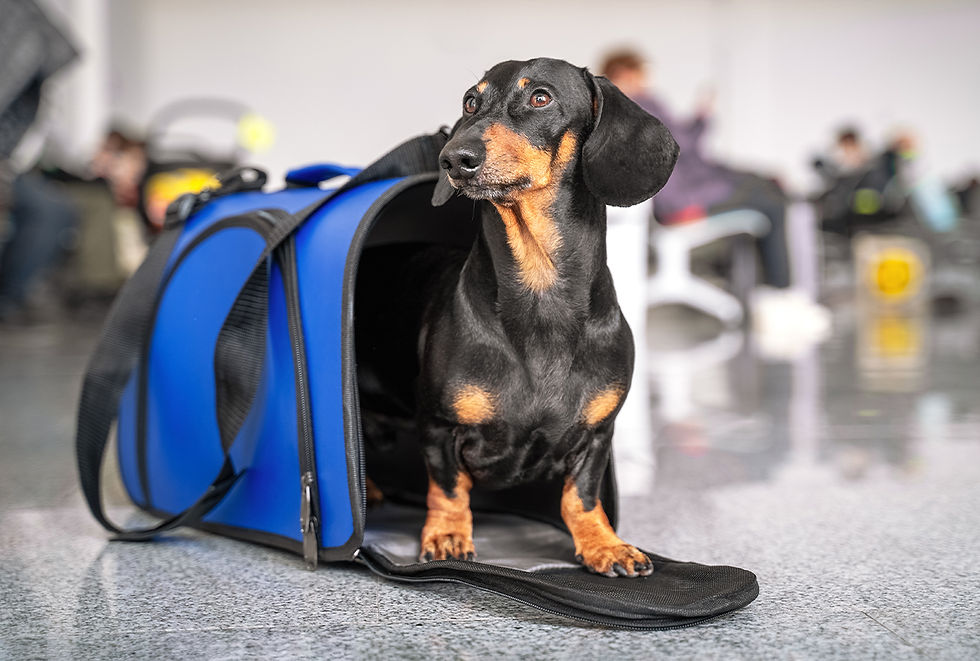
Pet Carriers/Crates - Travel carriers and portable crates keep your pet safe while traveling and provide a secure place for pets to retreat to and relax in unfamiliar settings.
Pet Seatbelts - If your dog is too large for a carrier for your car, a seatbelt is a must to keep him/her safe while you drive.
Poop bags/Wee Wee Pads/Portable Litter Box/Litter - Travel can disrupt bathroom routines, so be ready for whenever nature calls.
Water & Food Bowls - ALWAYS have fresh water available for your pets to prevent dehydration. Water bowls and food bowls designed for travel keep things convenient and clean.
Food/Treats - Changes in routine and travel stress can cause digestive upsets. Bring your pet’s regular food and treats to avoid additional tummy troubles.
Grooming Items - Pet safe wipes, flea and tick preventatives, brushes and flea combs help keep your pet fresh and pest-free.
Pet First Aid Kit - A handy portable care kit for when the unexpected happens.
Beds/Blankets/Toys - Bring your pet’s bed and/or favorite blanket and toys on your trip to help them feel more comfortable and at-home in unfamiliar surroundings.This bed will smell like your pet and will remind them of the comforts of home, which can make them much calmer during your travels together.
Be sure your pet has access to this bed any time when they aren’t confined to their crate. Some pets may also prefer to have the bed in the crate or carrier with them; however, others may soil the bed while traveling, so it may be best to avoid this unless you know for sure your pet will not go to the bathroom on their bed.
Leashes/Collars/Harnesses - Check that these items are in good shape and fit properly. Vacation isn’t the time to have a worn leash, collar, or harness break at an inopportune moment. Replace items that have seen better days or that your pet has outgrown.
ID Tags/Tracking Devices - Make sure your pet’s microchip is up to date. Along with your pet’s permanent ID tags, your pet should have travel tags that include the contact info for where you’ll be staying while away. Also consider getting a GPS tracking device if you don’t have one.
Practice Trips - Long drives or short overnight stays at a friend’s place or hotel are great ways to get an idea of how your pet responds to car rides and being away from home so you can adjust preparations accordingly.
Keep to Your Pet’s Routine - As much as you can, try to stick to your pet’s daily routine while you’re away. Routine is calming and comforting to your pet. The familiar rhythm of feeding times, walks, play, treats, and bedtime can help your pet feel at home wherever you are. Ensure playtime and enrichment time with them as well. Depending on your pet’s personality, you may also want to limit his/her time with strangers until they’ve settled down a bit to avoid overwhelming them.
Find Your Nearest VEG ER for Pets - VEG ER for Pets has locations throughout the United States and in Canada. Check to see where your nearest VEG is by your destination location as well as along the way of your travel itinerary.
Travel advice for pet parents by mode of transportation
Traveling with pet by car
Use only a safe and appropriate pet travel carrier. It should be well-ventilated and large enough for your pet, but not so large that they will jostle around inside it. A general rule of thumb is that your pet should be able to stand and turn around comfortably within the carrier.
Make sure your pet is safely secured in the back seat of your car, whether that is in a crate or secured by a seatbelt.
Don’t ever travel with your pet in the back of a truck bed.
Cover your back seat with a light color cloth or blanket to help reflect heat.
Consider adding a sunshade to block sun coming in directly to your car’s back seat area, and add buckle covers if your pet is using a seat belt to prevent your pup from coming into direct contact with hot metal.
Make sure your car’s interior temperature in the back is safe and comfortable for your pet.
Never leave your pet in the car unattended or if your car breaks down. The interior of your car heats up fast - as much as 20 degrees in 10 minutes.
Plan on rest stops every 2-3 hours depending on your dog’s age and health (more frequently if needed). Along with a potty break, include a short walk to stretch their legs and encourage them to drink water or give them ice cubes to help avoid dehydration.
Don’t let your dog poke his/her head out the window while you’re driving - you can crack the window so your dog can sniff along the way, but still stay safe.
Traveling with pet by plane
Airlines have varied policies when it comes to traveling with pets, (and different rules for service animals) from the number of pets you can bring, to in-cabin guidelines, carrier standards and documentation required. Check ahead well in advance to determine what you’ll need.
Most airlines won’t allow pets to fly if the outdoor temperature is 85ºF or higher (75ºF for brachycephalic breeds).
In-cabin weight requirements may vary slightly by airline, but most are limited from 20 to 25 lbs. (including the carrier).
Some airlines may let you transport larger dogs as cargo or some may let you purchase a separate seat, but your dog must remain in the carrier beneath the front of the purchased seat on take off and landing.
Airlines limit the number of pets per flight and work on a first-come, first-serve basis, so make sure you book your pet’s destination and return flight well in advance.
Book direct flights when possible to minimize stress for your pet and avoid flights during the hottest/coldest times of day.
Airlines have specific travel crate requirements that you must adhere to.
Documentation needed for your pet to fly includes, but is not limited to:
Proof of rabies vaccination
Health certificate issued by your vet within 10 days of travel
A confirmed airline reservation for your pet
For international travel, a USDA-accredited veterinarian documentation and USDA endorsement via the Veterinary Export Health Certification System (VEHCS)
An updated microchip is also required for international travel
As of 2026, a CDC Dog Import Form may be required for dogs entering or returning to the United States
Be sure to check specific entry requirements of your destination for your pet, which may include quarantine periods.
Pet carriers count as a piece of carry-on luggage on your trip.
Pet carriers for airplane travel
Pet carriers for the airlines will need to meet different requirements than those for car travel. Take your time and do your research to figure out which features your carrier needs for the safety of your pet.

Traveling with pet by train or bus
In general, small dogs have better chances of being allowed to travel by bus or train.
Trains are generally more accommodating than buses for pet travel.
Not all train and bus lines allow pets, so be sure to check with your specific travel line for their pet travel policies and requirements.
Make sure your pet is microchipped, has ID and rabies vaccination tags, and opt for a GPS tracking device.
Similar to flying, trains and buses have size limitations for pets (usually 20 lbs.) and require that pets remain in their regulation-approved carrier, under your seat, for the duration of the trip.
As with the airlines, the number of pets per train is limited, so book destination and return reservations well in advance.
Pet carriers also count as one piece of luggage on your trip.
Train lines may limit allowing pets to routes that don’t exceed 7 hours of travel time.
You may have to arrive at least 45 minutes early to allow train agents to validate pet eligibility and paper work before departure.
Traveling with pet by boat
Cruise ships and rental boats
Most major cruise lines do not allow pets except for service dogs (not emotional support pets).
Some ships like Cunard’s Queen Mary 2 does allow pets, but they are not allowed in guest cabins, and may be confined to a kennel area that owners can visit at specific times. There may be a kennel staff that takes care of your pet’s feeding, walking, and care.
Ask about overnight supervision of pets
Ask if there will be a veterinarian on board
Check the costs so you're prepared
Understand the carrier's limit for number of pets per ship
If travel with pet is on your own boat
If you’re on your own boat with your pet, here are safety tips to ensure a safe sail:
A life vest is a must have even if your dog is an avid swimmer.
Opt for one that fits snugly, has adjustable straps and a handle to easily lift your pet from the water.
A bright color vest with reflective stripes is essential for good visibility. Have your pet wear the vest and become comfortable with it before you head out to sail.
Always make sure you have plenty of clean, cool fresh drinking water for your pet to discourage them from drinking sea, lake, or pool water.
Ensure your pet has a cool shaded area in which to rest to avoid overheating. Keep your pet well-hydrated and familiarize yourself with the signs of heat stress to avoid heat stroke and other heat-related injuries. Signs of heatstroke include increased drooling, lethargy, weakness, loss of consciousness, and seizures. Pets may quickly die from this condition if left untreated, so you should take your pet to the nearest emergency vet right away if she is showing any signs of heatstroke.
Make sure that boating chemicals are kept away from your pet, in sealed, pet-proof containers in cabinets or shelves your pet can’t reach. Be especially mindful of where your pet is at when fueling or cleaning your boat.
Sun protection is essential for dogs with short fur, or pale exposed skin. You can opt for pet-safe sunscreen or sun-protective/cooling shirts that block sun but won’t overheat your pet. NEVER USE HUMAN SUNSCREEN ON PETS. Only apply to your pet sunscreen specially formulated for them. Keep your own sunscreen safely out of your pup's reach. Also, discourage them from licking you if you’re wearing sunscreen. Ingredients like zinc oxide and xylitol found in sunscreens are harmful to your pet even in small doses.
General pet travel tips
No matter if you're traveling by car, plane, boat, or bus, these tips apply. Consider these to help ensure you and your pet experience easier and safer traveling time and a more relaxing vacation!
Practical travel tips for pet parents
Take practice trips with your pet
Your pet might not be experienced with traveling. To nip anxiety in your pet, you may need to take some practice trips to see how your pet will behave before you plan a longer trip. If you can afford to do so, try spending the night in a hotel with your pet close to your home. This way, you can judge how he will behave in this type of environment.
If staying in a hotel for a night is not an option, take some longer car trips with your pet to see how he does during lengthier travel. A day trip to a different dog park, beach, or state park in your area might be a good solution.
How to prevent your dog from getting lost on vacation
A lost pet is a heartache that you want to avoid at all costs. Especially when you're on vacation, you want to take extra precautions to keep your little pal safe.
Secure their surroundings - including setting up a portable gate that they can't breach while spending time outdoors (think: beach, hotel pool area, etc.)
When in public and not in an enclosed area, keep them on a leash or harness fits well enough that they can't get loose from.
Be sure your pet knows and obeys simple commands like "Come" and "Stay." If your dog or cat struggles with obeying commands, a certified trainer can help.
For car rides, your dog should ride in a carrier. If you happen to have a large dog who loves to stick their head out the window, be sure the window isn't so wide open that they can leap out and make a run for it! Large dogs should be strapped in with a seatbelt harness. Remember, your dog may be overly excited in new areas with new sights, sounds, and scents. An open window is an open invitation for them to explore; many dogs have gotten lost this way.
Keep an eye out for other pets. Dogs will especially be ready to bolt after another dog they see in the wild. Be sure your pet is always leashed or harnessed by your side, especially when other pets are present.
Be sure their collar tags and microchip registration is up to date. (See below.)
Get an ID Tag for your dog (and all pets!) and use a GPS tracking system for pets
A little ID tag can go a long way in protecting your pet if they get lost. A simple collar around their neck lets everyone know that they have a family waiting for them at home. You’ll want to include some key information on the tag to make it easier for your pet to be found.
Data to include on your pet's ID tag:
Your pet’s name
Your name and phone number
Your street address
Keep your pet's microchip up to date
Unlike collars which can sometimes slip off, microchips stay with your pet for life. That’s why, if present, it’s important to keep the information on it up to date. Whether you’ve adopted/rehomed a new pet or you’ve moved into a new home or changed your number – it just takes a few minutes to do and it can make all the difference in getting your pet back to you.
Track your pet with a GPS
For some extra peace of mind, a GPS tracker is the most effective way to know your dog’s or cat’s live location at any time. Most trackers sync with your phone and notify you if your pet wanders away from home, no matter how far you may be.
With a GPS tracker you can also learn about your pet’s daily routine; from your cat’s exercise and sleep patterns right down to how frequently your dog barks. Some trackers also provide reports on areas that may be dangerous to your pet based on reviews by other pet parents in the neighborhood – this way, you can keep an eye out and help your furry friend avoid risks such as poisonous plants or active traffic.
Give your pet their own space when traveling
Your pet most likely has a space that he can call his own in your home. However, when you’re on the road with them, they won’t have access to this space anymore, and this may stress them out. Another important holiday travel pet safety tip is to provide your pet with a small, comfortable place they know is safe and secure for naps and just getting away from it all.
Some pets are perfectly comfortable in their carriers (with the door open) for this purpose. Others may need a secure crate or a small corner of the room that can be theirs, even temporarily.

Rest stop safety for pets
Rest stops can be confusing and sometimes scary to pets who are unfamiliar with their surroundings.
Pets may become afraid or confused and try to run away and return home. Pets may also be more aggressive due to their nerves and could get into fights with other animals at the rest stop. Additionally, rest stops tend to have garbage or food items on the ground which pets may sometimes choose to eat if they aren’t watched carefully.
Pets may ingest toxins, foreign objects, and other poisonous substances they shouldn’t eat. And if you take your pet into a crowded area, there’s a good chance you’ll encounter items on the ground that your pet should not eat. A quick swallow of these items can be very dangerous. Always be sure to locate the nearest emergency vet at VEG ER for Pets just in case something like this happens with your pet while traveling.
To ensure their safety during these stops, have their leash attached before letting them get out of the car. Parking as far from the highway as possible is a good idea as well. Also parking where there are fewer cars can be helpful when maneuvering your pet out of the car so you can have a good handle on them.
Have patience with your pet
One of the most important travel pet safety tips to keep in mind is to be patient. Understand that your pet is going to be nervous during these travels. Even if they’re a seasoned pro at traveling with you, there may be times when they are more nervous than they would be at home, and this is perfectly normal.
Be patient with your pet as well as with yourself during this time. Traveling can be stressful for everyone, but your pet will be looking to you for safety.
What to do in a travel emergency with your pet
You’ve gone over your pet-travel preparedness list a dozen times, have all the pet travel essentials you need (plus some extras you couldn’t pass up), made sure your car is in tip-top travel shape and have all your bases covered.
Pet travel emergencies can still happen.
The most common pet travel emergencies include:
Heat stress/heat stroke
Ingestion of toxic items/substances
Strains/sprains/broken bones
Cuts/bleeding injuries
Whenever a medical emergency happens while traveling with your pet, ensure:
That you and your pet are in a safe location
That you stay calm to help keep your pet calm
That you don’t delay getting your pet to a VEG ER for Pets emergency pet hospital
VEG ER for Pets is open 24/7 at all of our emergency animal hospitals
Call your nearest VEG ER for Pets for immediate advice on care for your pet as you transport them to the emergency hospital or just come in - no appointment is ever needed. We have locations throughout the United States and in Canada, open 24 hours a day, 7 days a week, including holidays, because pet emergencies never take a vacation.


