Updated: Apr 27
As a responsible pet parent, it’s important to educate yourself on the safety guidelines recommended for pets in and around water. Getting caught in currents, drowning, and near or dry drowning are very real dangers to pets, especially dogs.
The good news is that with a few precautions, you can minimize risk of drowning and other dangers. Read this article to learn how to keep your pet safe around swimming pools, lakes, and other bodies of water. Know that VEG ER for Pets has emergency vet hospitals that are open 24 hours, weekends and holidays too, in case your pet ever needs help.
Water safety tips that every pet parent should know
How to teach a dog to swim
First and foremost, consider teaching your pet to swim. For this section, we'll focus on dogs, who are more apt to be in water. Swimming is fairly instinctive for most animals, but that doesn’t mean you shouldn’t practice with your dog before you go into any large, deep, or intimidating bodies of water.
Steps to help teach your dog to swim:
Take your dog into the water with you and stick to a shallow area with little to no current.
Wait for your dog to start paddling, then support under your dog's chest and abdomen so they can learn how to float properly.
It may take a few tries, but your pet could become a natural at swimming in no time.
If your dog doesn't seem to get the hang of it, or is panicking in the water, you may have a land lover and need to find other activities to enjoy.
Caution: swimming is not for all dogs
Understand that some breeds are not suited well for swimming. Brachycephalic breeds like Boston Terriers, Bulldogs, and Pugs, have short legs and narrow airways, making swimming dangerous. Additionally, other short-legged breeds like Corgis, Dachshunds, or any puppy, may also struggle to stay afloat.
Consult your primary care vet before attempting to teach your dog to swim to address any concerns.
Watch out for water currents
Currents and tides are just as dangerous to pets as they are to humans, and even pets who know how to swim very well can be swept away by rip tides or strong currents if you aren’t careful. Due to this, another important water safety tip to keep in mind is to pay close attention to any tide warnings for your destination and always check the current strength in any body of water before letting your pet swim.
Do not let your pet go out too far from the shore in any body of water. This way, they will still be able to make their way back safely if the current becomes too strong.
Caution: salt water is dangerous for pets to ingest. Salt water ingestion can throw off electrolytes, and require emergency vet care.
Signs your dog swallowed salt water

Supervise pets in and around pools and other bodies of water
Never leave your pet in the water unattended for any period of time. Only let your pet swim when you can keep a close eye on them. And of course, if you yourself cannot swim, make sure to have a family member or friend with you who can, just in case an emergency should occur.
Also, if you have a swimming pool in your backyard, make sure to keep it covered or install a fence around the pool to make sure your pet does not fall in or attempt to swim without supervision. This can prevent serious accidents, including drowning or ingesting water, which can be life threatening.
Use a pet life vest
Whether you'll be boating with your pet, or they'll be spending time in a body of water that they cannot stand up in easily, pets should wear a life vest. This way, the pet will be able to stay afloat even if something goes wrong.
A pet’s life vest should also have a built-in handle on top of it. This makes it easier for you or any other humans to grab hold of the pet and hoist him out of the water if they become fatigued, stressed, or experience difficulty. Easy pet retrieval in the water can help prevent accidents and can even save a life.
Rinse off your pet after swimming
Your pet’s fur and skin health both rely on your pet staying dry and free from exposure to harsh chemicals, minerals, and contaminants. However, when your pet swims, he is exposed to all of these and much more, so he will need to be rinsed off well after playtime is done.
Ideally, you should give your pet a bath after spending time in any body of water. If this is not possible—for example, if you are camping or on vacation and can’t bathe your pet easily—a thorough rinse will work in a pinch. Be sure to avoid the face, eyes, mouth, and ears when bathing.
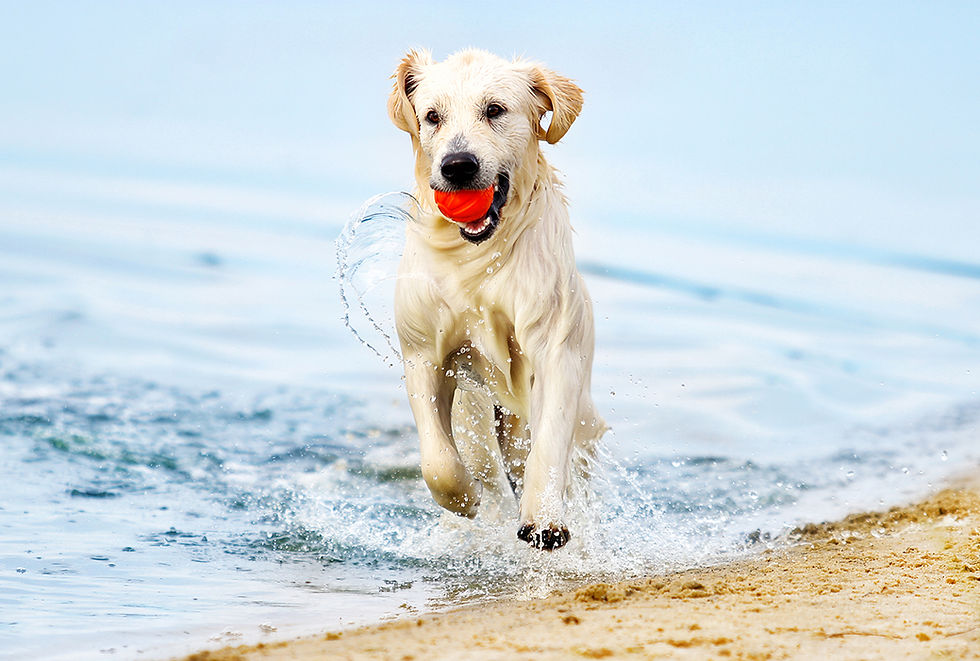
Keep pets away from dangers in the water
While not directly caused by the water, bodies of water can be sources of harmful bacteria, toxicity, and dangerous entaglements.
Water hazards to pet's health and safety
Algae - keep pets away from any algae, especially blue-green algae. Ingestion of algae can be dangerous and even fatal
Dead fish - it's natural for a dog or cat to be curious and drawn to dead fish, but ingestion poses serious toxicity risks like botulism and parasites. See an ER vet immediately if your pet eats a dead fish.
Fishing gear - fish hooks, fishing lines, and bobbers can cause serious injury.
A fish hook may go down easy but can cause punctures along the esophagus and other areas that need to be addressed by a VEG emergency veterinarian.
Fishing lines are more than a nuisance for your pet; they can cause drowning if wrapped around their paws. Always monitor your pet's swimming activity.
Fishing bobbers are unfortunately the perfect size to get caught in a pet's throat and cause choking. Call an ER veterinarian and let us know you're coming in. They may instruct you to perform a pet Heimlich, which you can learn about here for cats and dogs.
What is cold tail in dogs?
You’re drying off your dog after a swim and notice there’s something wrong with their tail. Their usual happy-waggin’ tail is not moving at all, and it’s pointed downward. You try to move the droopy tail and your pup lets out a yelp: a signal that it’s time to see an emergency vet!
The vet diagnoses a condition called acute caudal myopathy, aka limber tail aka “cold tail” or “wet tail.” Now, when the vet discusses something you’ve never heard before, you want to know everything you can about it. So, here we’ll discuss cold tail, its causes, and treatment.
What causes cold tail aka limber tail in dogs?
While in the water, your pup may have strained the use of their tail, as they may use it to help them steer in the water; think: boat rudder, only furry. This overexertion can inflame the tail muscles and nerves, causing the cold tail condition.
Another cause for cold tail is just that: the water may have been too cold. Before a dog goes for a swim, check the water temperature. In addition to serious concerns of hypothermia, you also don’t want to risk your dog getting cold tail, as it could be painful to your pup.
The ideal water temperature for your dog’s swim is between 45ºF-75ºF. Any cooler, and you risk hypothermia and cold tail; any warmer, and a dog could suffer heat exhaustion, especially when exerting themselves by the physical motions of swimming. (Even though we call it the doggy paddle, it’s a repetitive motion that can exhaust your dog over time.)
Signs of cold tail in dogs
In addition to a droopy tail, your dog may display other signs and behaviors:
Signs of pain (yelping, whimpering)
Pacing and restlessness (unable to find a comfortable spot to sit or lay down)
Licking or chewing on the tail
Squatting when pooping
How is cold tail treated?
Cold tail is alarming, but with time, the strained tail muscles and nerves will calm and restore your dog’s tail health. Your vet may prescribe anti-inflammatory medication to relieve your dog’s pain and to assist in the healing process.
For pet emergency care, call a VEG 24-hour animal hospital near you
Always make sure you know how to get in touch with our ER-trained emergency vet if anything should go wrong with your pet while in the water. Save us to your contacts for fast help when you need us.
If you have any questions or want additional advice on water safety tips for your pet, VEG has locations all over the U.S. and in Canada. Each VEG has a team of highly qualified emergency vets you can call, who are always ready and willing to help you and your pet.