As a pet owner, you’re probably already aware of just how important it is to pay attention to your pet’s health. But did you know there are dog and cat first aid techniques and tips you can learn, just like there are for humans?
By taking the time to learn canine/feline first aid, you can provide better care for your pet than ever before. Read through the list below to find out more about how to provide first aid to your pet if they ever need it. This is not a comprehensive list, but is a good starting point for pet first aid.
If you need emergency medical advice, call or bring your pet in to the nearest VEG ER for Pets. Our emergency animal hospitals are open 24/7 for your convenience. VEG vets provide ER care to dogs, cats, rabbits, reptiles, birds, and all pets. Best of all, you can stay by your pet's side the entire time.

Top 10 dog and cat first aid tips
First aid is never a substitute for veterinary care
While first aid is invaluable in keeping your pet alive in a crisis, please don’t mistake that it is sufficient care without veterinary intervention. Get your pet to your local VEG ER for Pets emergency vet hospital immediately when a medical emergency happens.
Keep yourself safe
Seeing your pet injured or distressed is understandably upsetting, and while your natural instinct may be to hug your pet, you need to remember that your pet can be in pain, frightened and confused and can instinctively snap or lash out at you. Be sure to keep your face away from your pet’s mouth when tending to their injury.
Stay calm for less stress for you and your pet
Staying calm yourself, as difficult as that may be, can go a long way in helping to keep your injured pet calm, which will help them from running off and/or thrashing around, causing further injury. Watch for signs like stiff posture, growling, “whale eye,”or attempts at escape (fear indicators) and try to calm your pet before attempting to restrain them.
Properly restrain and transport your pet
Restraining your pet is an important first step in providing first aid, but the types and levels of restraint differ greatly depending on the kind of medical crisis occurring and the pet involved.
When NOT to use restraints
Not every pet can or should be restrained. If your pet is highly agitated after an injury or accident, don’t use restraint. If you can, gently drape a blanket over your pet to help calm them.
NEVER restrain or muzzle a pet who is vomiting, is having difficulty breathing, has visible injuries to the head, face, or muzzle, is unconscious, or if they may have back or neck injuries.
Don’t restrain or muzzle your pet if you are uncomfortable or unsure of how to do either safely. Call VEG ER for Pets and we can advise you on how to get your pet to us safely.
Types of pet restraints
For small dogs or cats, carriers are a safe way to restrain and transport your pet.
Blankets can also be used to restrain your pet. Never wrap a blanket tightly around your pet.
Blankets can be rolled into bolsters to minimize limb movement without direct touch to injured areas.
Covering your injured pet with a blanket can help keep your pet warm if they start to go into shock.
In some cases, with the help of another person, you can also use the blanket as a sling for transport.
Placing your pet on top of a sheet of heavy cardboard, plywood, or other level surfaces can keep your pet stable during transport especially in the event of a head or spinal injury. Always try to minimize movement of your pet’s head, neck, or spine when transporting your pet.
If you and a helper are carrying your pet on some type of board, make sure your pet is secure by wrapping a blanket all around the pet and board.
You may want to consider purchasing a portable dog stretcher with wheels to have on hand and when traveling, especially if you have a larger dog and/or live alone.
A basket muzzle can also be a helpful restraint aid in certain circumstances and is worth considering purchasing. (NEVER use tape or tie your pet’s muzzle shut).

Check your pet's airway if not breathing
If your pet is not breathing, if possible, swipe your fingers into the pet’s mouth to remove objects or substances that could be obstructing their breathing, such as thick saliva or pieces of broken toys. If you cannot remove the objects or if you suspect your dog will bite you, get to the emergency vet hospital immediately.
Place the palm of your hand on the left side of your pet’s chest to check for a heart beat.
If pet is not breathing, perform rescue breathing
After clearing the pet’s mouth of objects or substances, if possible, pull the tongue out gently so the tip is outside the mouth and extend the head and neck carefully. Wrap a hand around the pet’s muzzle and hold the mouth shut. Breathe into the nostrils and check for rising and falling of the chest.
If there is no rising and falling of the chest visible, this may indicate something is obstructing the airway.
How to perform CPR on dogs and cats
Time is of the essence when a pet needs CPR. Rather than performing CPR on your own, it is important to get them to the emergency room as quickly as possible where it can be performed by veterinary professionals with the proper equipment. However, here are some CPR tips that you can try on the way to the vet if your pet is not breathing and/or you cannot detect a heartbeat or pulse.
Canine and feline CPR is similar to human CPR, but it is not performed exactly the same.
3 steps for CPR on dogs and cats
Begin by putting the pet on their right side and checking for a pulse in the groin area, on the inside of the pet’s leg, or feeling for a heartbeat in the chest. *If you have a brachycephalic dog (Pug, French Bulldog, Shih Tzu, etc.) ), you should place them directly on their back for CPR.
Place one hand over the other, keep your elbows locked, and position your hands over the middle of the chest.
Compress the pet’s chest about 30 times per minute, then administer 2 rescue breaths. Understand that it is possible to break ribs performing CPR on pets, just as it is possible to do this with humans.
Treat a pet's blood loss quickly
If your pet is bleeding, use a piece of clothing, a towel, or a bandage to create a dressing. Press firmly on the injury if possible to try to stop the flow of blood. Any bleeding should be treated right away by an emergency vet rather than managed at home.
If the blood loss is coming from a toenail that has been cut to the quick, you can stop this type of bleeding by applying direct pressure. However, blood loss from the nail should also be assessed by a veterinarian particularly if it does not stop bleeding.
Treat dog or cat's burns appropriately
If your pet has been burned in any way, begin by rinsing the burn with room temperature water right away. Continue this process for several minutes, but be sure you don’t make your pet too cold in the process and potentially risk shock instead.
Wrap the burn in very damp towels and keep your pet as still as possible. Offer your pet fresh, clean water to drink (note, they may not drink). Always follow up with a vet or emergency vet for any type of burn injury.

Keep a pet first aid kit for home and travel
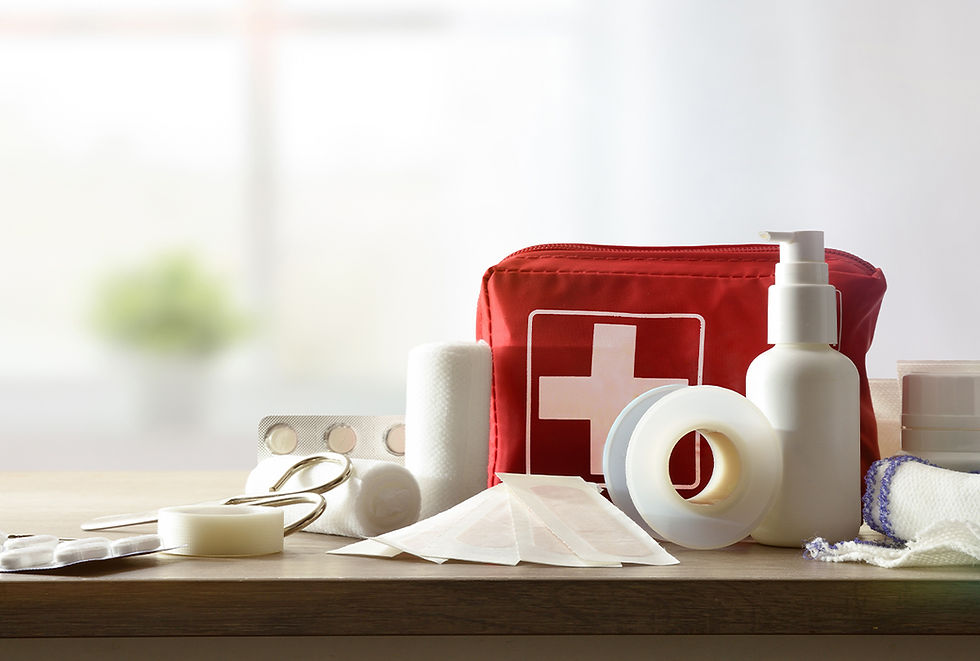
Being able to quickly access medical supplies you may need for your pet in an emergency can make a difference. Having a pet first aid kit on hand (at home and with you when traveling) is an important safeguard.
You can either purchase a first aid kit for your pet or create your own.
What to put in a pet first aid kit
An Emergency Contact Card - This is helpful for quick reference. It should include your vet’s name, phone number and location along with your nearest VEG ER for Pets phone number and location. Note any allergies or medications your pet may have.
Your Pet’s Medical Records - Having a copy of your pet’s medical records in your first aid kit will be helpful for the emergency vet caring for your pet.
Sterile Gauze Pads & Roll
Self-Adhering Bandage Wrap
Bandage Tape
Disposable Latex or Rubber Gloves
Blunt-Tipped Scissors (For cutting bandages, only)
Tweezers
Pet-Safe Antimicrobial Wipes/Spray/Ointment (Always check with your vet prior to application)
Pet Thermometer (If you’re uncomfortable using a rectal thermometer, there are underarm thermometers for your pet you can use by placing it under one of your pet’s front legs).
Pet-Safe Saline Rinse/Pet-Safe Lubricating Eye Drops/Ointment
Small Flashlight
Magnifying Glass
Nylon Slip Lead
Cotton Swabs
Epsom Salts
Emergency Blanket (Mylar thermal blanket)
Nail Trimmer & Styptic Stick or Powder
Needleless Syringe - Can be used for flushing out wounds (NEVER give water to a pet who is unconscious, lethargic, having trouble breathing, or vomiting).
Pet Towels, Cleaning cloths, Absorbent/Wee-Wee Pads
Soft Cone - This can be helpful in keeping your pet from licking a wound during transport or biting you while tending to your pet’s injury.
Travel Bowls, Water, Treats - Water and treats can be helpful distractions if it’s safe to give them to your pet. Always check with your vet first, and never give anything to a pet who is having a seizure, vomiting, unconscious, is having trouble breathing or is lethargic.
Call VEG animal hospital for emergency or pet urgent care
It is very important to learn how to provide first aid to your pets. With the help of this guide, you should understand where to get started. When you take time to learn first aid for your pet, you can keep them safer during a crisis.
If you have any questions or want additional pet first aid tips, VEG has locations all over the U.S. and in Canada; each with a team of highly qualified emergency vets you can call. At every VEG location, our emergency veterinarians and nurses are available 24 hours a day, 7 days a week, and they are always willing to help you and your pet.