If your cat seems to be using the litter box more frequently than usual, it could be a red flag for a health issue ranging from something minor to a life-threatening emergency. The challenge is it's not easy to tell the difference at home.
It’s important to determine whether your cat’s frequent litter box trips mean more urine production (are you scooping more or bigger clumps?) or if your cat is straining and producing little or no urine.
If you notice your cat is peeing more than normally, call VEG ER for Pets. We’ll let you know if it seems like an emergency that should be seen or if it can wait for your primary care vet.
How often should my cat urinate?
Healthy adult cats typically urinate two to four times per day, although this varies depending on:
Water intake
Diet (wet food versus dry food)
Activity level
Age
Environmental temperature
Certain medications
Cats eating canned food often produce larger volumes of urine than cats eating dry kibble because they consume more moisture.
Rather than counting litter box visits alone, pay attention to changes in your cat's normal routine. A cat that suddenly begins visiting the litter box every 10 to 30 minutes, cries while urinating, or repeatedly squats without producing urine needs immediate veterinary evaluation.
How long can cats go without peeing?
As discussed above, there are some factors, like water intake and age, that can change how long a cat can hold their pee. With indoor/outdoor cats, this is a common concern for many working parents. For example, if you do not keep a litter box inside your home, and always let your cat out to pee, you’ll want to know how long is too long to be away from the home. Typically cats can hold their urine for up to eight hours, however, read the factors again above to see what might be your cat’s safety zone.
A cat holding their pee for too long can trigger a medical emergency.
We recommend speaking to your primary care vet if you’re concerned that your cat won’t have access to a litter box over a period of time, such as when taking a long travel with your cat.
Cat’s urinary output vs. frequency
Your cat can be making frequent trips to the litter box with very different outcomes:
1. Increased frequency with little or no urine output.
2. Increased frequency with increased urine output.
In this article, we’ll focus on increased frequency in litter box use and increased urine output.
To learn more about increased frequency in litter box use with decreased or no urine output, check out our blog, “Cat Not Peeing - Is This an Emergency?”
Increased urine production (polyuria)
You notice your cat seems to be using their litter box more frequently and you’re seeing larger urine clumps and/or filling the litter box more quickly than usual, indicating increased urine output. Benign reasons for this increase can include:
A recent switch from dry food to canned food, which has a higher moisture content
Increased water consumption due to warmer weather
But it’s important to remember that ANY change in your cat’s litter box routine should be checked out by your vet, since greater urine output can also be a sign of serious systemic illnesses like:
Chronic Kidney Disease (CKD)
Diabetes Mellitus
Hyperthyroidism
What can I expect when I bring my cat to VEG ER for Pets for an examination?
After speaking with you to get an intake evaluation of what is going on with your pet, our veterinarians typically perform a complete physical examination. If appropriate, evaluation might also include:
Urinalysis
Urine culture
Blood chemistry testing
Complete blood count (CBC)
Blood pressure measurement
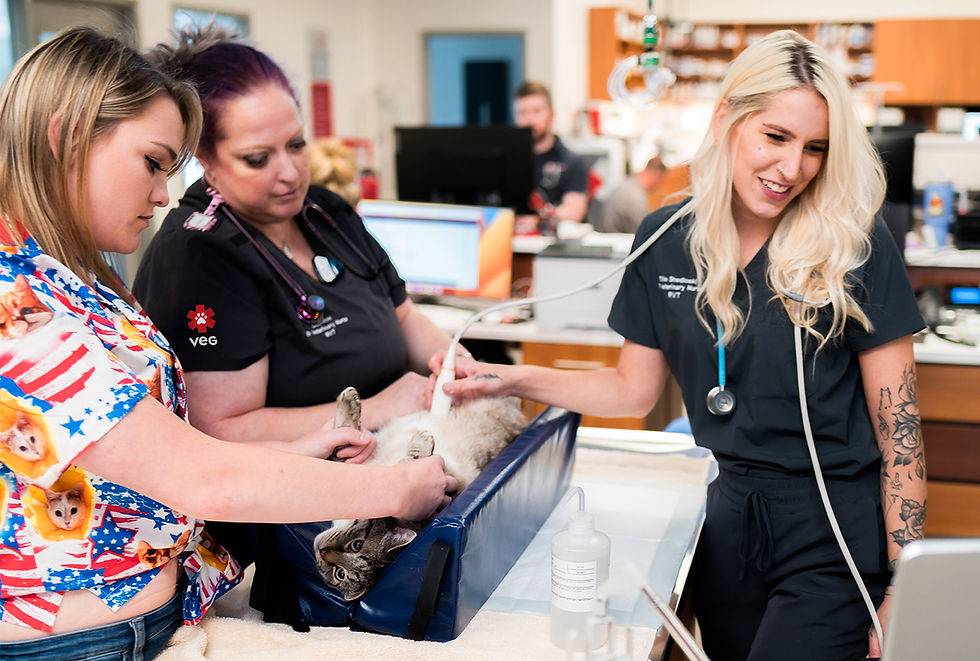
Major medical causes of increased urine output in cats
Chronic Kidney Disease (CKD)
CKD is a condition common in older cats. When kidneys are damaged, they can lose the ability to concentrate urine, leading to diluted, high-volume output of urine along with increased thirst.
Symptoms of CKD
Increased urine output
Weight loss
Poor grooming
Treatment of CKD in cats
Kidney disease is typically managed with the aid of medications, diet, and proper hydration.
When possible, determining the underlying cause and proper staging of the disease may affect treatment protocols. For instance, blood pressure management may be included, along with medications for nausea or appetite support.
Depending on the severity of your cat’s condition upon arrival to the hospital, they may receive IV or subcutaneous fluids.
Prescription diets play an important role in managing CKD. Therapeutic renal diets are formulated with lower amounts of high-quality protein and low phosphorus levels to help reduce the level of waste products in the bloodstream.
Which cats are most susceptible to CKD?
While cats of any age can be diagnosed with CKD, the risk sharply increases with age. It is estimated that 30%-50% of cats 15+ years of age have CKD.
Certain breeds also seem more susceptible to developing CKD. These include Persian, Abyssinian, Siamese, Ragdoll, Burmese, Russian Blue, and Maine Coon.
Diabetes Mellitus
Diabetes is a disease of the endocrine system in which the body either doesn’t produce enough insulin or can’t use the insulin it does produce. As a result, excess sugar in the blood spills into the urine, pulling extra water along with it, drastically increasing urine volume.
Symptoms of diabetes in cats
Increased urine output (accidents outside of litter box common)
Increased appetite initially
Vomiting later on in disease progression
Weight loss
Weak back legs
Poor grooming
Treatment of diabetes in cats
Insulin administration – May be injected under the skin (usually twice a day) or in some cases, oral medications may be prescribed.
Diet – High-protein, low-carb canned or dry diets are typically prescribed to control blood glucose levels and manage weight. Excess weight is a risk factor for diabetes.
Regular vet checkups – Routine bloodwork and glucose monitoring are essential to determining proper medication levels and adjustments.
At-home monitoring - Watching your cat's daily water intake, appetite, and litter box use can provide early indications of changes you may need to address.
Remission potential – Some studies have shown that early, aggressive diabetes treatments have resulted in 30%-40% of cats being able to go off insulin entirely.
Which cats are most susceptible to diabetes?
As with most illnesses, any cat has the potential to develop diabetes, but common risk factors include:
Obesity
Lack of exercise
Gender (male cats are more predisposed than females)
Increased age (middle-aged male cats in particular)
Cats undergoing steroid therapy
Burmese cats carry a higher lifetime risk
Hyperthyroidism
This is one of the most common endocrine diseases affecting senior cats. About 95%-98% of hyperthyroid cases are caused by a benign thyroid tumor called an adenoma. This tumor causes an overproduction of the thyroid hormone called thyroxine. One of the primary functions of thyroxine is to regulate your cat’s metabolism.
Too much thyroxine greatly increases a cat’s metabolic rate. This pushes the body into overdrive, which can result in weight loss despite increased appetite and lead to high blood pressure and a type of heart disease called hypertrophic cardiomyopathy.
Symptoms of hyperthyroidism in cats
Increased thirst
Increased urination
Increased appetite
Weight loss
Vomiting
Hyperactivity
Increased vocalization
Treatment of hyperthyroidism in cats
Radioactive iodine therapy (I-131) – Can cure hyperthyroidism in most cases. Administered in a specialty hospital and requires a minimum 3-day hospital stay.
Daily medication – Drugs like methimazole lower thyroxine to manage – not cure – hyperthyroidism. Must be given once to twice daily with regular blood monitoring.
Special diets – Iodine is needed to produce thyroid hormones, so low iodine diets can restrict the amounts of thyroid hormones being produced. This diet must be fed EXCLUSIVELY or it will not be effective.
Which cats are most susceptible to hyperthyroidism?
Older cats overwhelmingly are most likely to have hyperthyroidism, with 95% of cases being diagnosed in cats over 10 years of age. The average age of diagnosis is around 13 years.
Some purebreds like Siamese, Burmese, and Persians may actually have a lower risk of hyperthyroidism than mixed-breed cats.
Both male and female cats are equally at risk for hyperthyroidism.
Why is my cat urinating outside the litter box?
While many owners assume urinating outside of the litter box is a behavioral problem, the reality is that it’s more often a sign of a medical problem—an important red flag to get your cat to the vet ASAP for a physical exam.
Cats experiencing bladder pain can associate the litter box with discomfort and attempt to avoid it, while cats with diabetes or other conditions causing increased urine output may simply be unable to hold their urine until they get to the litter box. Urinating outside the litter box isn’t limited to literally just outside the box. Your cat may also urinate:
On the bed
On clothing
On rugs
Near doors
On cool tile floors
Any sudden change in litter box habits should prompt a veterinary examination before assuming it's a behavioral issue.
Caring for your cat at home after treatment
Recovery depends on the diagnosis, but follow-up care often includes:
Administering medications exactly as prescribed.
Ensuring there are always several sources of fresh water available to your cat. This might include water fountains which can help encourage a beneficial increase in water intake.
Feeding prescription diets if recommended and adhering to restrictions on treats, table scraps, etc. if indicated.
Careful monitoring of daily litter box habits – keep a diary or calendar.
Scheduling and going to all recommended recheck appointments. Blood work monitoring is critical.
Even after successful treatment, cats with urinary disease may experience future episodes, making ongoing monitoring especially important.
Can excessive urination be prevented?
Not every urinary condition can be prevented, but you can lower your cat's risk by following good proactive health habits like:
Following your veterinarian's recommendations for prescription urinary diets if your cat has a history of urinary disease.
Feeding moisture-rich diets when appropriate.
Encouraging adequate water consumption with multiple water sources and/or fountains.
Keeping litter boxes scrupulously clean – scoop daily and scrub litter boxes clean weekly.
Providing one litter box per cat plus at least one extra.
Maintaining a healthy weight for your cat.
Reducing environmental stressors.
Scheduling regular veterinary wellness exams.
VEG ER for Pets is here for you whenever you need us
It’s important to remember that cats instinctively hide their illnesses extremely well, so by the time they become obviously symptomatic, their medical issues may be more advanced. Avoid a “wait and see” approach and don’t hesitate to get your cat checked out if you see any changes or increase in their drinking and/or urine output.
Remember that all of our locations are open 24/7, including holidays for your peace of mind and your pet’s health.