If your dog is dealing with a little skin discomfort, don’t fret: skin irritation, itching, redness, and sores are extremely common in dogs, and not every rash, bump, scab, or itchy patch is a harmful infection. Most skin infections in dogs are mild and can be easily managed by your primary care veterinarian, while some skin infections can be more severe, progressing quickly and signaling a more serious underlying issue.
As a pet owner, the key is knowing when a skin problem in dogs is more than just an itch. In this blog, we’ll cover the most common skin infections in dogs and when it’s time to seek emergency veterinary care at your nearest VEG ER for Pets.
What is a dog skin infection?
Skin infections in dogs happen when bacteria, yeast, fungi, or parasites grow on or in a dog’s skin, causing discomfort in the form of itching, redness, bumps, hair loss, scabs, a bad smell, or discharge. These infections can happen on their own, or they can develop after the skin barrier has been damaged by allergies, cuts, scratching, moisture, or another skin problem. Identifying the cause of your dog’s skin infection is helpful, as different types of infections require different treatments.
Primary infections vs. Secondary infections
Primary infections occur when the skin has direct contact with an infected organism or object. Common examples include the infections that result from contact with mites, and ringworm, which can be picked up from infected surfaces in addition to infected animals and humans.
Secondary infections occur as the result of another issue like allergies, where inflammation on the skin creates an environment in which bacteria or yeast can thrive. Moisture, wounds, parasites, and other skin conditions can also cause secondary infections. A secondary infection can come back if the underlying cause is not treated.
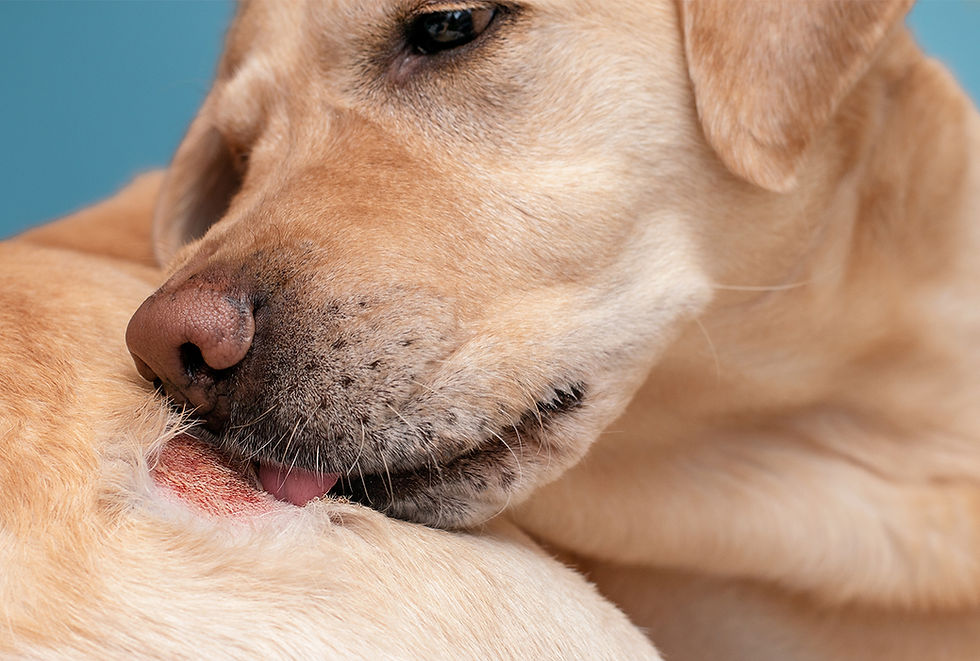
How do I know if my dog has a skin infection?
When assessing your pup’s skin irritation, keep the following questions in mind:
What does the skin look like?
Where is the irritation located?
Is my dog itchy, in pain, or acting sick?
Could this be an infection, parasite, allergy, injury, or another condition?
Most common symptoms of skin infections in dogs
Persistent or intense itching/scratching
Redness, swelling, or warmth
Hair loss or bald patches
Scabs, crusts, bumps, pustules, or open sores
Oozing, bleeding, or pus
Unusual or foul odor
Excessive licking or chewing, especially of paws
Pain or sensitivity when touched
Thickened, darkened, or discolored skin
Rapidly spreading areas of irritation
Symptoms can look similar across a variety of different skin conditions, so don’t assume the cause based on appearance alone. Instead, bring your pup to VEG, where our highly trained emergency veterinarians can assess and treat the infection.
What are the most common types of skin infections in dogs?
Bacterial skin infections (Pyoderma) in dogs
Bacterial skin infections, also called pyoderma, happen when bacteria grow too much on or in a dog’s skin. They often develop when the skin has been damaged by allergies, scratching, moisture, or another skin problem.
Pyoderma in dogs can cause red or inflamed skin, small bumps or pus-filled spots (pustules), crusts or scabs, and areas of hair loss. Some dogs may also have itchy or sore skin. Superficial infections affect the outer layers of the skin, while deeper infections reach further into the skin and may cause more pain, swelling, or sores.
Yeast infections in dogs
Yeast commonly grows in warm, moist areas, such as skin folds, paws, and ears. A dog yeast infection happens when there is an overgrowth of the yeast that normally lives on a dog’s skin. This can make the skin red, itchy, greasy, or irritated. Yeast infections can also cause a strong, musty, or unpleasant smell.
Dogs with allergies are more likely to develop yeast infections because allergies can damage the skin and create conditions where yeast grows easily. Yeast infections may also keep coming back if an underlying problem is not treated.
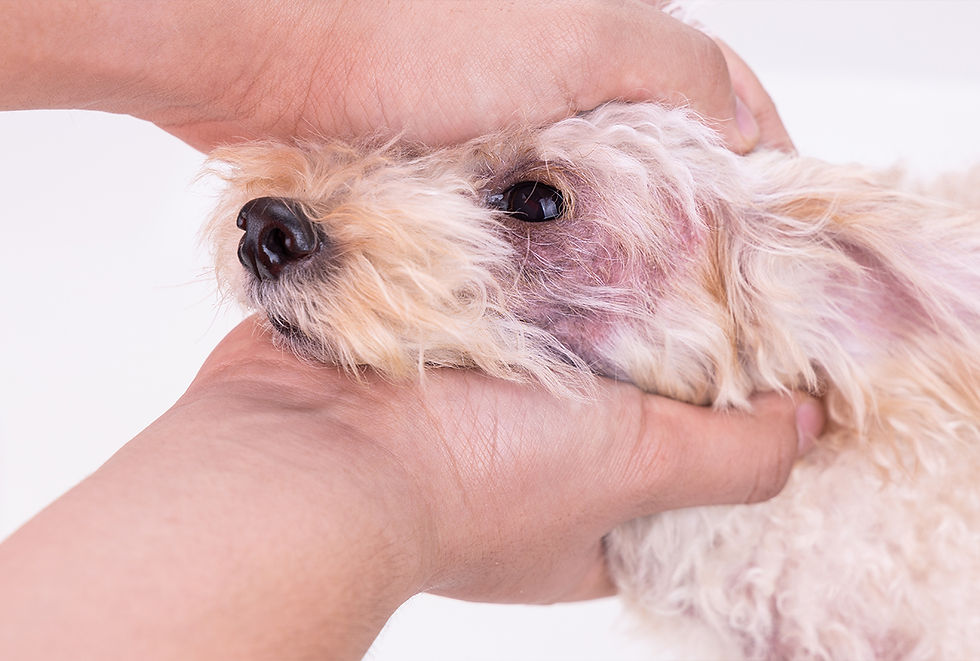
Fungal skin infections (including ringworm) in dogs
Fungal skin infections in dogs happen when fungi grow on a dog’s skin or hair, causing itching, redness, scaling, crusting, or hair loss. Fungal infections are different from bacterial infections because they are caused by fungi rather than bacteria, so they require different testing and treatment. Some fungal infections affect only the skin, while others can go deeper.
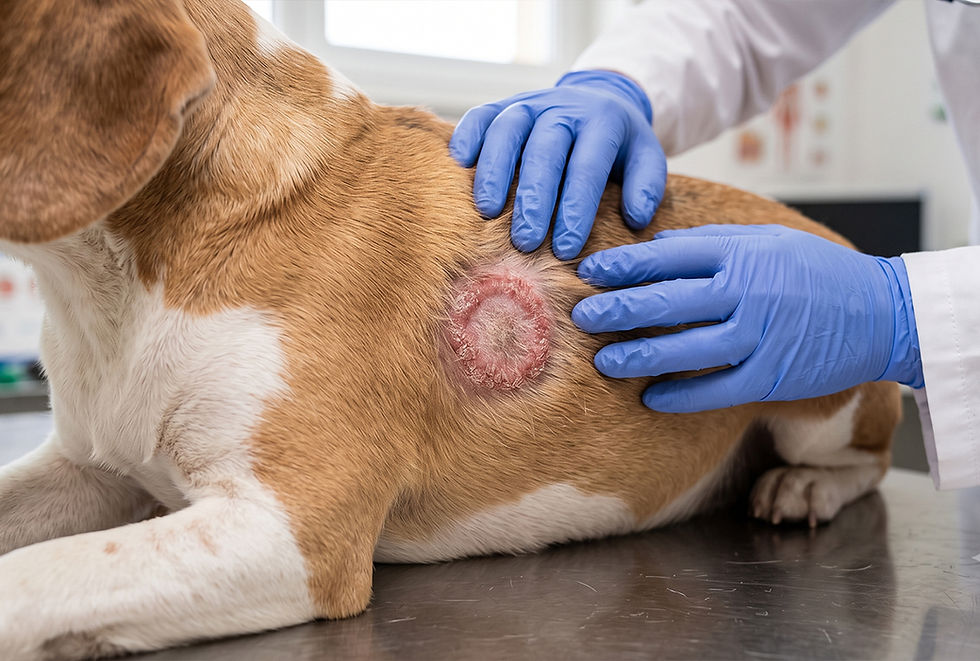
Despite its name, ringworm is a fungal infection and not a parasite or worm. Ringworm causes raised circular lesions on the skin, areas of hair loss, flaky or scaly skin, and sometimes redness or crusting. Ringworm in dogs is highly contagious and can spread between dogs and may also spread to people, so suspected cases should be handled carefully.
Dog hot spots
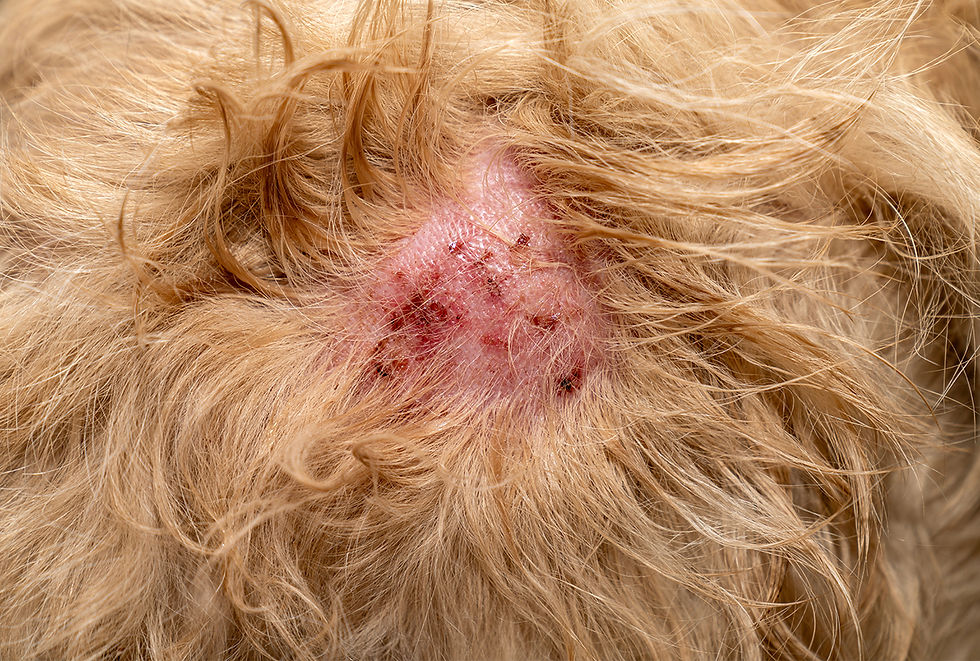
Hot spots in dogs are moist, red, inflamed areas of skin that can develop very quickly. They often start when a dog repeatedly licks, chews, or scratches one spot, which damages the skin and makes the irritation worse.
Hot spots can become sore or painful and may ooze or develop a crust. Allergies, insect bites, moisture, or other skin problems can trigger the cycle of itching and licking. Because hot spots can worsen quickly, it’s important to identify what caused the irritation and prevent further scratching or licking.
Dog dermatitis
“Dermatitis” is just a fancy word for inflammation of the skin and does not necessarily indicate an infection. Dermatitis in dogs can be caused by many things, including allergies, skin irritation, parasites, moisture, or contact with something that bothers the skin.
Dogs with dermatitis may have red, itchy, dry, or irritated skin. Constant scratching, licking, or chewing can damage the skin and make the problem worse. Once the skin barrier is damaged, bacteria or yeast can grow more easily and cause a secondary infection. Because dermatitis can have many causes, finding and treating the underlying cause is an important part of helping your dog’s skin heal.
Allergic skin reactions in dogs
Allergic skin reactions in dogs happen when a dog’s immune system reacts to something that normally would not cause a problem. Common triggers include environmental allergens, certain foods, fleas or other insects, and contact with irritating substances.
Allergies can cause itching, redness, rashes, and hives. Dogs may scratch, lick, or chew their skin repeatedly, which can damage the skin’s protective barrier. This makes it easier for bacteria and yeast to grow, leading to secondary skin infections. Because the allergy may continue to trigger skin irritation, these infections can keep coming back unless the underlying allergy is also addressed.
Mange and other parasitic skin conditions in dogs
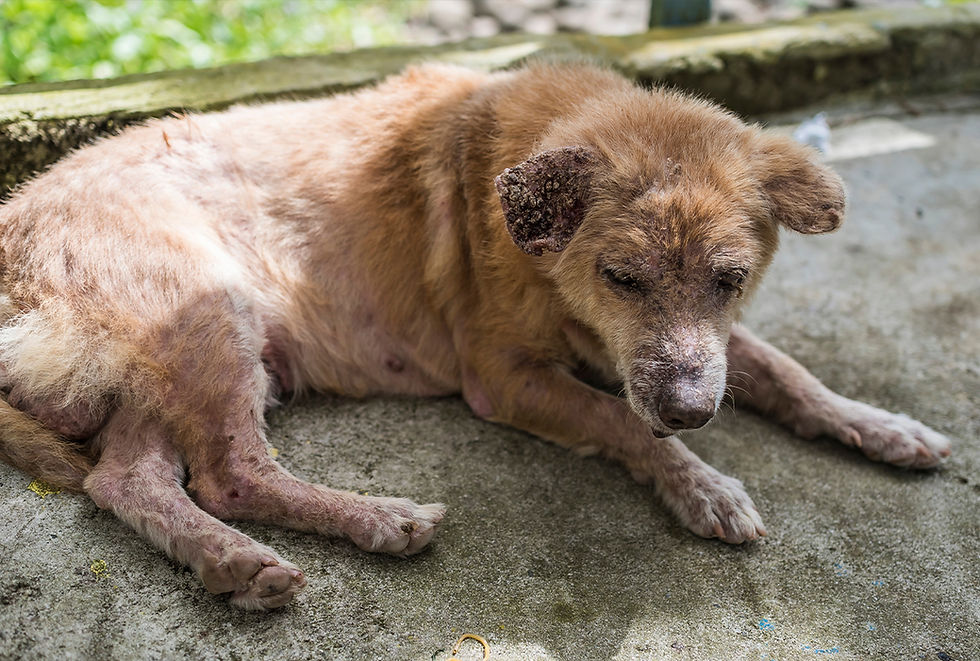
Mange in dogs is a skin condition caused by tiny parasites called mites. Different types of mites can affect dogs and may cause intense itching, hair loss, redness, crusting, or scabbing. Dogs with mange may scratch, lick, or chew their skin often, which can further damage the skin and sometimes lead to a secondary bacterial or yeast infection.
How to manage skin infections in dogs
Prevent excessive scratching, licking, and chewing whenever possible. We recommend using an appropriately fitted cone or Elizabethan collar (E-collar).
Keep the area clean and dry unless a veterinarian has instructed otherwise.
If ringworm or another contagious condition is suspected, limit contact with other pets and people and wash hands after handling the affected area.
If there is active bleeding, use gentle pressure with clean gauze or cloth while seeking care at your nearest VEG location.
Take a photo of the skin to document changes over time.
Avoid applying human medications or household products unless specifically directed by a veterinarian.
Don’t squeeze abscesses unless specifically directed by a veterinarian.
Prioritize getting immediate veterinary care in an emergency, rather than delaying care to try home treatments.
When is a dog skin infection an emergency?
While most skin infections in dogs are not emergencies and can be treated by your regular veterinarian, there are certain signs that warrant emergency veterinary care for your pet.
Seek emergency veterinary care for skin infections in dogs when:
The affected area is rapidly spreading, especially over hours.
There is significant swelling, severe pain, extensive tissue damage, or large/open wounds.
There is heavy bleeding or bleeding that does not stop with gentle pressure.
There is substantial pus, foul-smelling discharge, or evidence of a deep infection.
Your dog is lethargic, weak, disoriented, collapsing, or behaving unusually ill.
Your dog has a fever or feels unusually hot and appears sick or in pain.
Your dog is having difficulty breathing, facial swelling, or other signs of a potentially severe allergic reaction.
A skin problem developed after a bite, puncture wound, chemical exposure, burn, frostbite, or other significant injury.
Your dog is unable to stop scratching, licking, or traumatizing the area and is becoming increasingly distressed.
A dog’s overall condition matters as much as the skin itself. When symptoms are so severe that they begin to affect your dog’s well-being, bring your pup to your nearest VEG emergency animal hospital for evaluation and treatment by our team.
How to prevent dog skin infections
While some breeds are more susceptible to certain types of skin infections, there are a few simple steps you can take to help protect your dog’s skin and reduce the risk of infection:
Stay consistent with parasite prevention.
Use veterinarian-recommended flea, tick, and parasite prevention to help reduce skin irritation and parasite-related conditions that can lead to infection.
Groom regularly and check the skin.
Regular brushing and routine skin checks can help you spot redness, bumps, scabs, hair loss, or other changes early.
Keep skin folds clean and dry when appropriate.
Dogs with skin folds may be more prone to moisture buildup and irritation. Follow your veterinarian’s recommendations for safely cleaning and drying these areas.
Manage allergies.
Allergies can damage the skin barrier and increase the risk of secondary bacterial or yeast infections. Work with your veterinarian to identify and manage your dog’s allergy triggers.
Address excessive licking and scratching.
Persistent licking, chewing, or scratching can damage the skin and make infection more likely. If your dog is repeatedly traumatizing an area, contact your veterinarian to determine the underlying cause.
Have recurring infections evaluated.
If your dog’s skin infections keep coming back, veterinary evaluation can help identify underlying problems such as allergies, parasites, or other skin conditions. Treating the underlying cause can help reduce recurring infections and keep your dog’s skin healthier.
VEG animal hospitals are open 24 hours for every dog emergency
Most dog skin infections are treatable when diagnosed and treated promptly. If your dog’s skin infection is accompanied by severe pain, rapidly worsening skin changes, significant wounds, heavy bleeding, systemic illness, breathing difficulty, facial swelling, or collapse, bring them to VEG for immediate veterinary attention.
At VEG, our emergency vets are available around the clock (even weekends and holidays) to provide emergency care for your pet. You’ll see a doctor right away, and you never have to leave your dog’s side.