Oops! Dropped some pills? Don’t assume it’s harmless. To your dog or cat, it could be cause for a life-threatening emergency.
Human medications including over-the-counter medicines such as ibuprofen and acetaminophen are one of the most common sources of pet poisoning.
The tricky part? Your pet may look perfectly fine at first. But both prescription and O-T-C medications can cause serious problems before noticeable symptoms develop.
Dogs and cats process medications differently than people do. A medicine that’s safe for you — or even one that veterinarians sometimes use for animals — can cause serious poisoning if the medication, formulation, or dose isn't right for your particular pet.
Never give your pet a human medication unless your veterinarian has specifically told you it is safe and has provided instructions on the dosage.
If you think your dog or cat may have swallowed a human medication, don't wait. Contact VEG ER for Pets immediately.
Think your pet ate medication for humans? Do this now!
If your dog or cat has ingested your medication:
Find the medication bottle or package.
Determine what may be missing. Count remaining pills, if possible.
Contact ASPCA animal poison control immediately at 888-426-4435.
Contact your nearest VEG ER for Pets and let us know you’re coming in.
Note the medication's strength and formulation. Extended-release and combination products can present different risks.
Know your pet's approximate weight, age and medical history.
Estimate when the ingestion may have happened.
IMPORTANT: Do not induce vomiting or give your pet another medication, food, milk, or a home remedy unless a veterinary professional specifically tells you to.
Common signs of medication poisoning in pets
Medicine toxicity doesn't always look the same. Some pets become sleepy while others become restless or overstimulated. Possible warning signs include:
Agitation
Weakness
Loss of coordination
Tremors
Abnormal heart rate
Changes in body temperature
Unresponsiveness
The specific symptoms depend on the medication and amount involved.
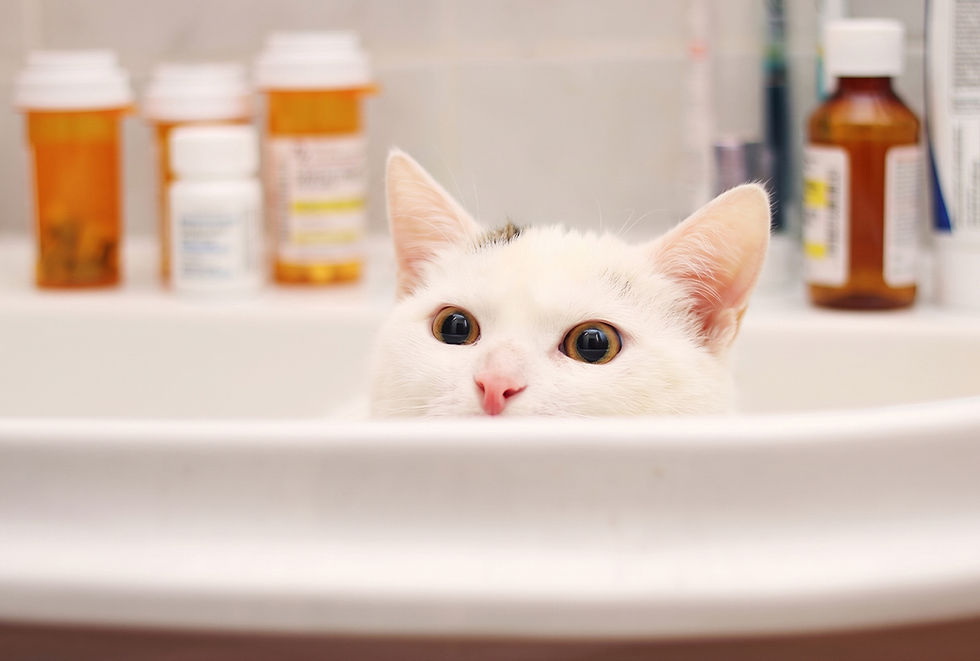
10 human medications toxic to pets
These are some of the human medications that pet owners should be especially concerned about:
1. Human NSAIDs: Ibuprofen, Naproxen, and Aspirin
Examples: Advil, Motrin and Aleve.
Why it matters: Human Nonsteroidal Anti-Inflammatory Drugs (NSAIDs) can cause serious poisoning in dogs and cats. Depending on the medication and amount, they can cause stomach and intestinal ulcers, bleeding, kidney injury and neurologic problems.
Symptoms may include: Vomiting, diarrhea, abdominal pain, lethargy, blood in vomit or stool, changes in urination, weakness, or seizures.
What to do: Call your vet or a pet ER immediately — even if your dog or cat looks completely normal.
2. Acetaminophen
Example: Tylenol.
Why it matters: Acetaminophen is particularly dangerous for cats. It can damage red blood cells and interfere with their ability to carry oxygen through the body. Dogs can also develop serious liver injury and experience other toxic effects.
Symptoms may include: Weakness, vomiting, lethargy, difficulty breathing, facial or paw swelling, or gums that look brown, blue, or gray.
What to do: Treat any suspected ingestion as an emergency, especially in cats.
3. ADD/ADHD medications
Examples: Adderall, Ritalin, Concerta and Vyvanse.
Why it matters: These medications can contain powerful stimulants. Even relatively small ingestions can cause dangerous neurologic and cardiovascular effects.
Symptoms may include: Restlessness, agitation, pacing, panting, tremors, rapid heart rate, high body temperature, or seizures.
What to do: Seek immediate veterinary care.
4. Antidepressants
Examples: Effexor, Cymbalta, Prozac and Lexapro.
Why it matters: Some antidepressants are used in veterinary medicine, but an overdose can cause significant neurologic and cardiovascular toxicity.
Symptoms may include: Sleepiness, agitation, loss of coordination, tremors, seizures, rapid heart rate, high blood pressure, or elevated body temperature.
What to do: Don't assume a single pill is harmless. Contact a vet promptly.
5. Heart and blood-pressure medications
Examples: Beta-blockers such as metoprolol; calcium-channel blockers such as amlodipine, diltiazem and verapamil; and ACE inhibitors such as lisinopril.
Why it matters: Some cardiovascular medications can cause a dangerous drop in blood pressure or heart rate. Calcium-channel blockers are among the medications identified as potentially life-threatening in pets.
Symptoms may include: Weakness, lethargy, collapse, abnormal heart rate, or difficulty breathing.
What to do: Consider a suspected ingestion an emergency, even if your pet initially seems only tired.
6. Sleeping pills and anti-anxiety medications
Examples: Ambien, Lunesta, Xanax, Klonopin and Ativan.
Why it matters: These medications can cause profound sedation and loss of coordination. Some pets can instead become agitated or unusually excited. Severe exposures can affect breathing.
Symptoms may include: Extreme sleepiness, stumbling, weakness, agitation, vomiting, or slowed breathing.
What to do: Contact a veterinarian immediately, particularly if your pet is difficult to wake or breathing abnormally.
7. Decongestants and cold medications
Examples: Pseudoephedrine and phenylephrine, often found in products such as Sudafed and combination cold medicines.
Why it matters: Decongestants can affect the heart and nervous system. Combination cold and flu products can be especially concerning because they may contain multiple active ingredients, including acetaminophen or antihistamines. Some formulations may also contain xylitol, which is highly toxic to dogs.
Symptoms may include: Agitation, rapid heartbeat, tremors, vomiting, weakness, or seizures.
What to do: Keep the complete medication package and call your vet or VEG ER for Pets immediately.
8. Prescription opioid pain medications
Examples: Oxycodone, hydrocodone and morphine.
Why it matters: Opioids can depress the central nervous system and breathing.
Symptoms may include: Extreme sleepiness, weakness, stumbling, slow or abnormal breathing, unresponsiveness or collapse.
What to do: Seek emergency veterinary care immediately, especially if they are excessively sleepy or having trouble breathing. VEG animal hospital is open 24/7.
9. Asthma medications and inhalers
Example: Albuterol.
Why it matters: A pet that chews or punctures an inhaler can receive a concentrated exposure. Albuterol can cause significant cardiovascular effects and dangerous changes in blood potassium.
Symptoms may include: Rapid heartbeat, weakness, shaking, agitation, abnormal heart rhythms, or breathing changes.
What to do: Call VEG emergency pet hospital immediately if an inhaler is chewed, punctured or swallowed.
10. Muscle relaxants
Example: Baclofen.
Why it matters: Baclofen is a prescription muscle relaxant for people that can cause severe poisoning in pets. It is considered a potentially deadly pet toxin. In small dogs, even one or two tablets can potentially be life-threatening.
Symptoms may include: Drooling, disorientation, vocalization, weakness, seizures, coma or difficulty breathing.
What to do: Seek urgent veterinary care.
What about vitamins and supplements?
Vitamins and supplements may not sound like "medications," but they can still cause poisoning. ASPCA reports that vitamins and dietary supplements were the most common type of OTC medication exposure reported to its Poison Control Center in 2024. Certain products, including vitamin D3 and iron-containing supplements, can cause serious illness depending on the amount ingested. The risk depends on the exact ingredients and amount, so keep the bottle and call VEG animal clinic to speak to a vet rather than guessing whether the product is safe.
Can any human medications be safe for pets?
Sometimes — but that does not mean you can give them to your pet without veterinary guidance. Some human medications are also used in veterinary medicine. For example, veterinarians may recommend certain single-ingredient antihistamines, such as diphenhydramine, cetirizine or loratadine, for specific situations. Some human antacids and anti-diarrheal medications may also have veterinary uses.
The appropriate medication and dose as decided by a vet depends on your pet's:
Species
Weight
Age
Medical conditions
Other medications
Exact product formulation
How to prevent medication poisoning
Most accidental medication exposures happen at home. In fact, we’ve seen cases in our vet hospital where a dog ate a whole prescription in one sitting! The good news is that prevention can be surprisingly simple.
Store human and veterinary prescription and OTC medications in a closed cabinet
Don't leave pill bottles on nightstands or counters
Keep purses and backpacks containing medication away from pets
Keep pill organizers, prescription and OTC medication packages out of your pet’s reach
Pick up dropped pills immediately
Keep medications in their original labeled containers
Don't store human and pet medications together if they could be confused
Take medication over a sink or another easy-to-clean area so dropped pills are easier to find
Remember: child-resistant doesn't mean pet-resistant.
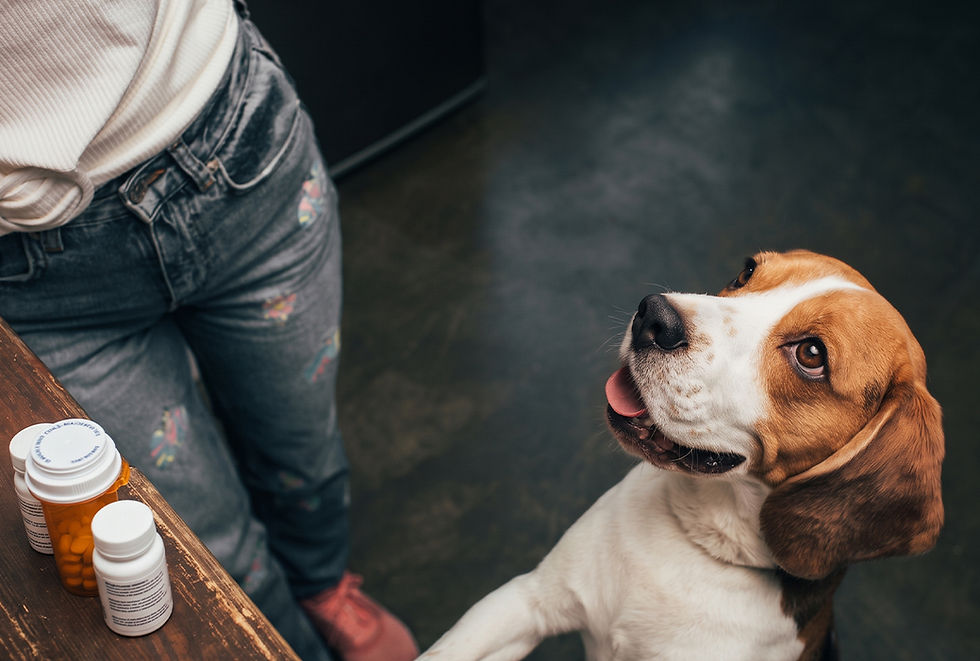
Common Human Medications Toxic to Pets
Medication | Potential Toxic Effects in Pets |
Ibuprofen & other NSAIDs | Vomiting, stomach ulcers, GI bleeding, changes in urination, kidney damage and, in severe cases, neurologic problems like seizures. |
Acetaminophen | Liver damage and red blood cell damage, facial or paw swelling; especially dangerous for cats. |
ADHD Medications | Hyperactivity, increased heart rate and blood pressure, overheating, tremors, and seizures. |
Antidepressants | Agitation,vomiting, drooling, dilated pupils, tremors, abnormal heart rhythms, high blood pressure, and seizures. |
Heart & Blood-Pressure Medications | Low blood pressure, slow heart rate, weakness, collapse and potentially life-threatening cardiovascular effects. |
Sleeping & Anti-Anxiety Medications | Severe sedation, weakness, lack of coordination, breathing problems or unexpected agitation. |
Decongestants & Cold Medications | Abnormal heart rate, blood-pressure changes, agitation, weakness and tremors. |
Opioid Pain Medications | Extreme sedation, slowed breathing, weakness, coma and potentially death. |
Asthma Medications | Rapid heart rate, tremors, weakness and potentially dangerous electrolyte changes. |
Certain Muscle Relaxants | Severe sedation, weakness, loss of coordination, seizures and breathing problems. |
Vitamins & Supplements | Vomiting, diarrhea, abdominal pain, tremors, seizures, kidney or liver damage, and dangerous changes in calcium or other electrolyte levels depending on the ingredients and amount ingested. Some supplements, including those containing vitamin D, iron or 5-HTP, can be particularly dangerous. |
Birth Control Pills | Very large exposures can potentially cause hormonal effects or bone marrow suppression. |
Antihistamines | Sleepiness, agitation, drooling, rapid heartbeat, tremors or seizures depending on formulation and amount ingested. |
When should I take my pet to an emergency vet?
This is not a “wait and see” event. Call or walk into VEG animal hospital immediately if:
You know or suspect your pet has swallowed medication
You can't determine how much may be missing
Your pet swallowed a high-risk medication such as an NSAID, acetaminophen, ADHD medication, cardiovascular medication, opioid, or muscle relaxant
You don't know what medication your pet may have swallowed
It’s an emergency if your pet is:
Vomiting repeatedly
Unusually sleepy, agitated, or uncoordinated
Showing signs of tremors or seizures
Weak, collapsing, or difficult to wake
Having trouble breathing
Even when your pet looks normal, a suspected medication poisoning can still require urgent veterinary care.
Treatment decisions depend on:
The medication ingested
The amount of medicine consumed
Time since exposure
Condition of the pet
Pet’s weight, age, and medical history
VEG is open 24/7, even on holidays… because every minute matters.
Just call or walk in; no appointments are taken or needed.
If you're worried about exposure to human medications toxic to pets, don’t wait for symptoms of poisoning in pets to appear. Our experienced doctors, nurses and assistants are equipped to handle such emergencies with compassion and great care. Remember, the sooner you bring them in, the faster we can start the treatment — so your four-legged mischief-maker can get back to doing what they do best: keeping you on your toes.