Updated: May 18
What is a foxtail? Why are these grassy weeds so dangerous to dogs? What do you, as a responsible pet parent, need to know about taking care of your dog around foxtails?
If you’ve ever asked yourself any of these questions, then you’ve come to the right place.
In the article below, you’ll find a quick but thorough breakdown of information about foxtails and how they relate to your dog. With the help of this guide, you can get a better idea of what to expect from these harmful weeds and when you should see an emergency vet for foxtails on your dog, too. Read on to find out more.
What is a foxtail?
To start, let’s clear up some terms. The term “foxtail” is often used to describe an “awn” or “grass awn.” There is a foxtail plant (a grassy weed), a foxtail (the fuzzy seedhead of the plant that resembles a fox’s tail, hence the name) and an awn/grass awn (the tiny barbed protrusion on the individual seed of the plant’s seedhead).
The distinction is important because not every foxtail plant has dangerous awns, but also because there are plants other than foxtails that contain harmful awns you need to be aware of.
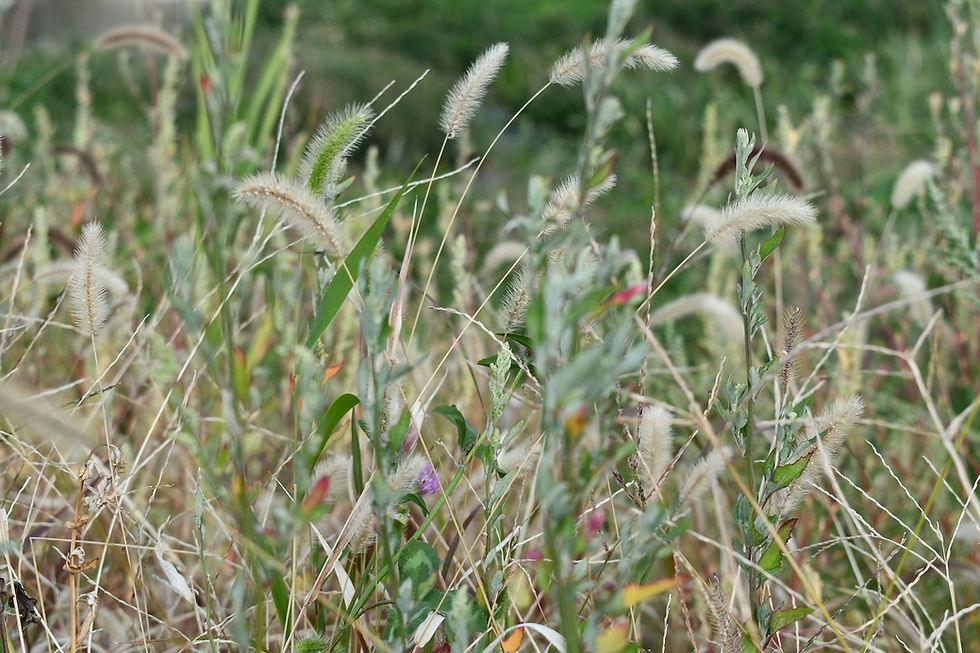
Why are foxtails so dangerous to dogs?
What makes the seemingly harmless fuzzy seedheads so dangerous? The tiny barbs easily latch on to your dog as he/she brushes past the foxtail, then by the very nature of its spear-like design with backward-facing barbs, the awn burrows deeper into your dog’s skin with movement. The backward barbs work like a one-way arrow, making them difficult to pull out, but easy to migrate through the body.
It’s important to understand that foxtails don’t come out on their own - they’ll only burrow their way in deeper, causing more harm. There is no “wait and see” approach to dealing with foxtails. If you suspect your dog has been exposed, don’t hesitate to bring them to the ER vet.
A foxtail seed can also enter through a dog's ears, mouth, nose, paws, eyes, or skin. From there, the seed can migrate to vital organs, resulting in severe complications—including infections, abscesses, and internal damage, and can even be fatal. Additionally, if inhaled, they can find their way into the lungs or even the brain. When this happens, they carry bacteria to these vital organs and create infections that are typically fatal.
One of the most concerning risks when it comes to foxtails on dogs is the risk of burying between the toes. If a foxtail becomes lodged between a dog’s toes, it may go unnoticed for a long time. By the time you realize something is wrong with your pet, it may be far too late to stop the foxtail from burrowing.
Foxtail season = increased risk for your dog
Foxtail season typically starts in late spring and continues throughout the summer months. In warm climates, foxtail season can continue through September. During this time, the grassy weeds turn brown and dry out, releasing their barbed seeds, posing an increased threat to your dog and a need for increased vigilance from you.
Found primarily on the U.S. West Coast, foxtail plants sprout up in all but a few states, most often in dryer regions, like California. While foxtail plants cannot thrive in states with high humidity and swampy areas, such as Florida and Louisiana, other plants with dangerous awns can be found there, including Foxtail Barley, Canada Wild Rye and Cheatgrass.
The following plants also contain barbed awns that pose a threat to pets:
Virginia Wild Rye
Needlegrasses (Needle and Thread, Western Needlegrass, California Needlegrass, Mexican Needle Grass)
Three-Awns (Red Three-Awn, Oldfield Threeawn)
Meadow Foxtail
Oatgrass
Wheat
Barley
Rye
Oats (some varieties are awnless)
Rice
Note: Some ornamental grasses such as fountain and muhly grasses contain harmful awns as well. In your garden, opt for plants that are safe around your pet.
Where does foxtail grow?
Foxtail grows in a variety of places that your dog may come across, like:
fields and meadows
lawns and tall grass
pastures
Which dogs are most at risk for foxtails?
Although hunting dogs are the most susceptible to foxtails because they spend more time in wild grasses than pet dogs, any dog (or outdoor cat) who walks in tall grass, along trails, through vacant lots or overgrown areas is at risk. Pets with long, thick or feathered fur are also at increased risk for getting foxtails. There is no set preventative for foxtails, so you should always check your dog’s body and paws thoroughly for them when they've been outdoors.

Signs and symptoms of foxtails and awns on dogs
How fast can foxtail injuries bet worse?
Foxtail injuries can escalate quickly from a mild irritation to a serious infection or abscess within days
In some cases, migration occurs before any external symptoms are obvious. That's why it's important to be diligent in examining your dog for any signs or symptoms (below) that may appear after interaction with foxtail grass.
Early intervention significantly reduces the risk of complications, surgery, and long-term damage
Symptoms vary depending on where the foxtail enters, but common warning signs include:
Limping or sudden lameness after foxtail contact
Limping is one of the earliest signs of foxtail exposure. A dog that suddenly begins limping—especially after being in tall grass—may have a foxtail lodged between their toe beans.
Excessive licking or chewing is a sign there's a foxtail between the toe beans
Excessive licking of the paws, legs, or other areas can indicate pain or irritation caused by a buried foxtail. Some dogs may lick their fur off their paws or legs.
Swelling, redness, or drainage
Any swelling, oozing, or tenderness should be taken seriously, particularly if it appears suddenly. VEG ER for Pets is open 24/7 if you spot any of these symptoms.
Sneezing or bloody nasal discharge is an unexpected symptom of foxtail inhalation
Repeated sneezing or blood coming from the nose may indicate an inhaled foxtail. This is a medical emergency requiring you to bring your pet to your nearest VEG ER immediately.
Head tilt or ear pain may be from foxtail grass or awn
A head tilt, pawing at the ear, or loss of balance can signal a foxtail in the ear canal and may indicate serious complications.
Lethargy, fever, or behavioral changes
If your dog seems unusually tired, irritable, or in pain after being outdoors, a migrating foxtail could be the cause. Don’t delay - bring your dog to your nearest VEG ER for Pets.

How to remove embedded foxtail
If you're not sure what your next step should be, just bring your dog to your nearest VEG emergency animal hospital. If you find a foxtail before it begins to burrow and feel comfortable in removing it, follow these steps:
Remove it with sterilized tweezers
Gently clean the affected area with antiseptic soap and rinse with tap water
Dry the area well afterward
Apply antibiotic ointment to the area
Keep an eye on the area over the next few days for any signs of infection, like redness or swelling
Follow up with your primary care vet to ensure removal was complete and your pet is okay. If you spot emergency symptoms, VEG dog hospital is open 24/7 to help.
If you see a foxtail that has burrowed or believe this has happened to your dog, go to your emergency vet. It may be necessary for your dog to undergo surgery to correct the problem and remove foxtails that have become lodged within his/her body.
If you have any concern that a foxtail has burrowed, your dog's health may be at great risk, so don’t delay - come see our ER vet team. There's no waiting at VEG. Walk in and your dog will be seen by a veterinarian immediately.

Foxtail prevention for dogs
While there’s no foolproof way to prevent foxtails from affecting your dog, there are preventative measures you can take:
Avoid fields and areas of tall grass during peak foxtail season (late spring through late summer/early fall)
Always thoroughly check your dog after being outdoors, especially if he/she has been running through a field or tall grass
Brush your pup thoroughly after outdoor activities
Keep fur around paws, armpits and belly trimmed if needed
Be sure to carefully check between your pup’s toe beans for foxtails, as well as areas of skin folds, ears and tail
Familiarize yourself with foxtails so you know what to avoid when outdoors with your dog. Be particularly alert during foxtail season
Choose pet-safe plantings for your home landscape to keep your pup safe
Contact VEG emergency dog hospital for foxtail concerns or symptoms
Foxtails are not just uncomfortable—they can be life-threatening. If you see a foxtail on your dog or notice symptoms after outdoor exposure, don't wait to seek help. When it comes to foxtails, acting fast can save your dog's life.
There's no waiting at VEG because we work exclusively in vet emergency and urgent care. When you give us a call, you will speak directly to an emergency veterinarian and your pet will always receive the care that they need. Our emergency vets can help you learn how to recognize the signs of foxtails more easily and can provide guidance for what to do if your dog comes into contact with them, too.


