Your dog got a little too curious, a little too friendly, and a little too close - and now they’ve got a face (or paw) full of porcupine quills!
Your first instinct might be to help by pulling them out as quickly as possible. But here’s the reality: Porcupine quills don’t behave the way you might think they do - and trying to remove them yourself can make things much worse.
What looks like a painful but simple situation can quickly turn into a serious medical emergency. Call or come in to any VEG ER for Pets emergency hospital and we'll safely remove porcupine quills from your dog.
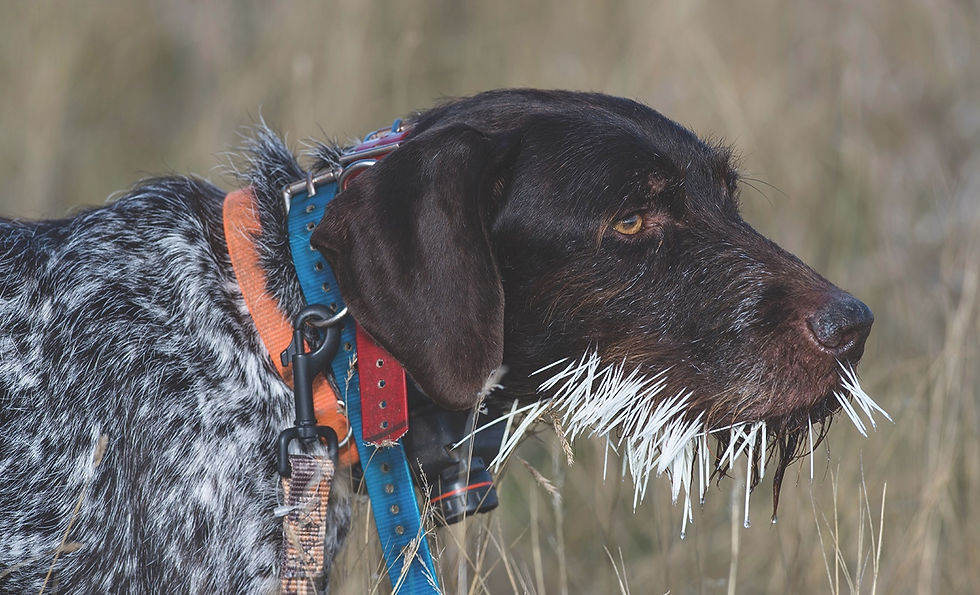
Do porcupines shoot their quills?
It’s unclear where this urban legend of porcupines shooting quills came from, but the answer (thank goodness) is no - porcupines can NOT shoot their quills.
What’s actually happening is that porcupine quills detach very easily on contact. When a dog gets too close - sniffing, pawing, or trying to investigate - the quills release and embed into the skin almost instantly.
Porcupines can also turn their backs, raise their quills, and flick their tails as a defense mechanism, which can make the encounter seem sudden or aggressive, but in reality - they’re not really attacking! They’re just protecting themselves.
For your pup, though, even a quick interaction is enough to end up with dozens (or more) quills embedded in their face, paws, or body. So while porcupines don’t “shoot” quills, the result can happen just as fast.
Why porcupine quills are more dangerous than they look
At first glance, quills can seem like splinters - painful, but manageable. But that’s where things can quickly become more serious. Porcupine quills are covered in microscopic, backward-facing barbs. These barbs are specifically designed to anchor into tissue and move deeper - not work their way out.
Once a quill is embedded in your pup’s skin, it doesn’t stay put. With your dog’s normal movement - walking, breathing, even swallowing - it can continue migrating beneath the skin.
The danger of porcupine quills to dogs
Over time, quills can:
Travel into muscles and joints
Penetrate deeper tissues
Migrate into the chest or abdominal cavity
Damage internal organs
In some documented cases, quills have been found in the lungs, spine, and even near the heart - days, weeks, or even months after the initial encounter with the porcupine.
On top of that, quills can carry bacteria deep into your dog’s body, increasing the risk of infection, inflammation, and painful abscesses. This isn’t just a surface injury - it’s something that can evolve into a much more serious condition.
How to remove porcupine quills from a dog
The short answer is: you don’t. When faced with a dog that’s been quilled, many pet owners think: “I’ll just pull them out carefully.” It’s an understandable instinct, but it’s also where things often go very wrong. Emergency vet care is what your dog needs, and fast.
The danger of trying to remove quills at home
When it comes to porcupine quill removal, taking actions into your own hands can:
Break the quills, leaving fragments embedded under the skin
Push them deeper as your dog moves or resists
Cause intense pain, leading your dog to panic or thrash
Make it more difficult for a veterinarian to fully remove them later
A common myth about porcupine quills
There’s also a common myth that cutting the quills makes removal easier.
This is not true. Cutting quills does not “deflate” them or reduce their grip. In fact, it can increase the likelihood that they splinter or break during removal.
Even if you manage to remove a few visible quills, there’s no way to know:
If pieces have broken off under the skin
If other quills have already started migrating
How deep some quills may already be
What looks “handled” on the surface may still be a serious problem underneath. Your best bet is always to take your pup to an emergency vet immediately for professional quill removal.
How vets treat porcupine quills safely
Porcupine quilling isn’t a “wait and see” situation. Veterinary teams will do their best to remove as much of the quill as they possibly can, although complications are always possible since it’s difficult to assure complete removal.
Treatment for porcupine quills on a dog at the emergency vet
Your dog will likely:
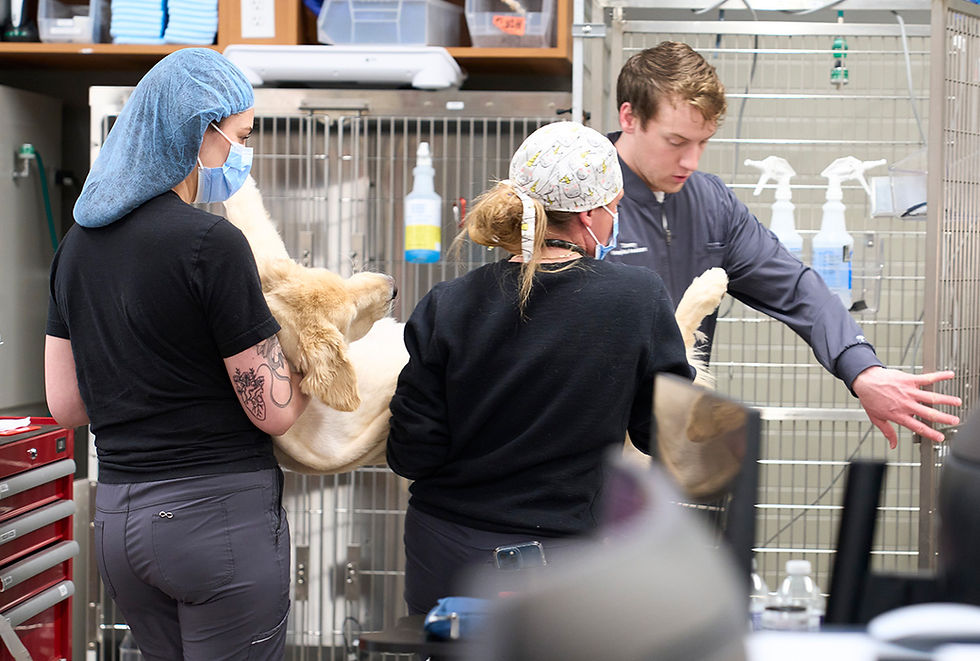
Be sedated to prevent pain and movement during removal
Have quills carefully extracted to avoid breakage
Be thoroughly examined for hidden or embedded quills
Receive treatment to reduce the risk of infection and complications
This level of care is critical. Without it, retained quills can continue migrating and cause serious internal damage.
Why you shouldn't wait to seek vet care for porcupine quills on dog
"But my dog seems okay." Here's the truth: after the initial encounter, some dogs seem relatively okay - especially if only a few quills are visible, but that can be misleading.
Because of how they move, symptoms of quills in dogs don’t always show up right away.
Signs of dog quilled by porcupine
As quills migrate deeper, you may start to see:
Swelling or tenderness
Limping or stiffness
Signs of infection (redness, heat, discharge)
Difficulty breathing in more severe cases
The longer you wait, the deeper quills can travel, and the harder they are to remove later. What might have been a straightforward removal early on can turn into a much more serious - and invasive - medical situation later. See a VEG emergency vet hospital near you asap.
What to do if your dog has been quilled by a porcupine
If your dog has been quilled:
Keep them as calm and still as possible
Do not touch or attempt to remove the quills
Prevent pawing or rubbing, which can push quills deeper
Head to an emergency veterinarian immediately
Because dogs tend to investigate with their snout first, most porcupine encounters affect a dog’s face, nose, or mouth, but they can also embed in the legs or chest. Fast action can significantly reduce complications - and your dog’s pain.
Avoiding porcupine-prone areas
Depending on where you live, porcupines may be a part of the local wildlife landscape. They’re common throughout the Western U.S., including the Rocky Mountains and Pacific Northwest, as well as in the Northeast in places like New England, New York, and Pennsylvania. They also inhabit parts of the Great Lakes and Midwest, including Wisconsin and Michigan. In areas like Vermont, encounters are especially common around wooded trails, backyards, and suburban neighborhoods that border natural habitats.
Porcupines' natural habitat
Porcupines tend to hang out in:
Dense brush or wooded trails
Around tree trunks or fallen logs
Rock piles or burrow-like spaces
Suburban edges where woods meet backyards
If your dog is sniffing intently in these areas, it’s worth redirecting them.
Dogs are naturally curious, which makes these run-ins hard to prevent entirely, but you can try to make encounters less likely with these tips:
Prevention tips for porcupine quill injuries to dogs
Keep dogs leashed in wooded or unfamiliar areas
Be cautious at dawn, dusk, and nighttime (when porcupines are most active)
Use a flashlight at night to spot movement early
Avoid high-risk areas like dense brush, fallen logs, and rock piles
Don’t let dogs roam freely, even in fenced yards near wooded areas
Practice a strong recall to redirect your dog quickly
Move away immediately if you spot a porcupine - don’t let curiosity linger
Contact VEG animal hospital for porcupine quill emergency
If your pup has a run-in with a porcupine, it’s always an emergency - skip the DIY and bring him to a VEG ER for Pets near you as soon as you can. VEG has locations all over the country that are open 24/7, which means that you never have to wait for your pet to receive proper care and treatment. Acting quickly can prevent serious complications - and get your dog back to feeling like themselves again.