A rainy-day craft project, family game night, or scattered toys across the living room — what may seem like a normal day at home with kids, can in fact turn into a serious emergency for your curious pet.
In this article, we’ll cover:
Which toys and activities pose a safety risk to pets
Injury and toxicity signs to watch for in your pet
How to pet-proof activities
When to call VEG ER for Pets
VEG is open 24/7 and our emergency vet team is here to help if your pet discovers that not all toys and games are made for them.
Pets and children’s toys: Why pets are drawn to them
Dogs (and sometimes cats) explore the world with their mouths. Bright colors, interesting textures, salty scents, and even leftover food residue on toys can make children's belongings especially tempting.
The problem? Apart from missing a vital part of a favorite activity, most toys aren't digestible — and some homemade craft ingredients are surprisingly toxic, often requiring immediate emergency intervention.
The danger of toys and activities to pets
From homemade play dough and slime to everyday play things like building bricks, foam darts, glow sticks, batteries, tiny toys and accessories, many popular children's activities pose hidden risks.
Risk to pets from biting or playing with toys
Choking
Kidney damage
Stomach irritation
Toxicity/poisoning

Homemade play dough: More dangerous than you think
Believe it or not, play dough made at home is one of the biggest threats we see for pets. Many DIY recipes call for large amounts of salt, making even a small amount potentially dangerous if eaten by a dog. In addition, many recipes include cream of tartar, which contains tartaric acid — a compound that has been linked to kidney toxicity in dogs.
Salt toxicity
Excessive salt intake can quickly lead to:
Toxicity symptoms from high salt content can be seen within hours and can rapidly become life-threatening without prompt treatment.
Cream of tartar toxicity
Cream of tartar contains tartaric acid, the same suspected toxic component found in grapes and raisins.
In dogs, ingestion can potentially lead to:
Vomiting
Lethargy
Increased thirst
Kidney injury or kidney failure
Kidney failure is not always readily apparent. So, if you suspect or know that your dog has ingested homemade dough, remember, it is not a "wait and see" situation — it’s an emergency. Call or head to VEG animal hospital, right away.
Homemade slime: Fun for kids, potentially toxic for pets
Slime has become a favorite craft activity, but homemade versions can be particularly dangerous. Many recipes contain ingredients such as:
Salt
Laundry detergent
Borax or boric acid
Contact lens solution
These ingredients can cause poisoning if ingested.
Signs of homemade slime toxicity may include:
Excessive drooling
Vomiting
Diarrhea
Mouth irritation
Weakness
Tremors
Some homemade recipes which don't contain these toxic ingredients may only cause mild stomach upset — but unless you know exactly what was used, it's safest to treat any slime ingestion as a potential emergency. At the very least, call and speak to a vet at VEG animal clinic.
What about store-bought slime?
Commercial slime may generally be less concerning than homemade recipes, but products vary widely. Even if the ingredients aren't toxic, swallowing large amounts can still cause:
Gastrointestinal upset
Foreign body obstruction from containers or accessories
If you're unsure what your pet consumed, contact a veterinarian right away.
Building bricks (like LEGO): Tiny toys, big problem for pets
Small plastic building bricks may not be toxic, but they can become dangerous once swallowed.
Potential complications include:
Choking
Esophageal obstruction
Stomach or intestinal blockage
Damage to the digestive tract
Large dogs sometimes pass small pieces, but there's no way to predict which pets will develop a life-threatening obstruction.
Watch for:
Repeated vomiting
Refusing food
Abdominal pain
Lethargy
Foreign body obstructions often require emergency surgery. Seek urgent veterinary care.
Foam darts (like Nerf darts): Soft doesn’t mean safe for pets
Foam darts are another common culprit we see at VEG ER for Pets. Because they're lightweight, soft, and easy to grab, pets often mistake them for chew toys.
Unfortunately, foam darts:
Don't digest
Can swell after being swallowed
Frequently become lodged in the stomach or intestines
Many pets require endoscopic retrieval or surgery to remove them.
Signs of an intestinal blockage include:
Persistent vomiting
Loss of appetite
Painful abdomen
Weakness
Inability to keep food or water down
These symptoms warrant immediate emergency evaluation.
Glow sticks & accessories: What to look out for
Glow necklaces, bracelets, and glow sticks usually aren't highly toxic — but they certainly get a dramatic reaction. The liquid inside contains an extremely bitter chemical.
Most pets experience:
While the liquid itself rarely causes serious poisoning, swallowing the plastic pieces can create a choking hazard or intestinal obstruction.
If your pet chews glow products, rinse their mouth with water and monitor closely. If plastic pieces were swallowed — or your pet continues vomiting or seems uncomfortable — seek immediate veterinary care.
Toy squeakers and rubber balls: Small parts, big risks for pets
Opening new toy gifts can be a highlight for kids. However, the fun of small squeakers or rubber balls can quickly turn into a choking or intestinal blockage hazard for your pet. Many dogs love to tear apart toys, and once a squeaker is loose, it’s just the right size to get stuck in the throat or intestines. This can lead to serious complications.
Look for the following symptoms of choking:
Gagging
Showing signs of distress during play
If you see these signs, seek veterinary attention immediately.
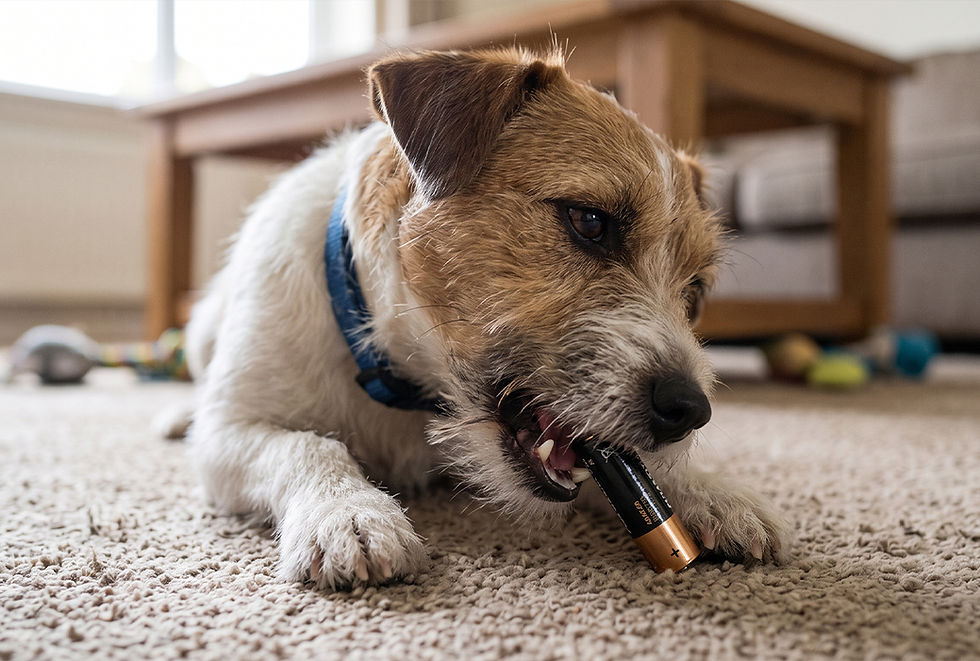
Batteries: Charged with toxicity for cats & dogs
Whether it’s in a toy or a remote — batteries are among the most dangerous items that your pet can ingest. Within hours of being bitten or swallowed, the chemicals inside a battery can cause severe burns and tissue damage (necrosis) to your pet.
Button batteries (the small, round kind) are especially risky for smaller pets and can cause life-threatening injuries very quickly.
If you think your pet may have swallowed a battery:
Seek emergency veterinary care at VEG right away
Do not try to induce vomiting or give your pet food or water
Bring the battery packaging (if possible) to help your vet identify it
Other small toys that can cause emergencies
Many common children's toys and accessories become dangerous once swallowed, including:
Doll accessories
Plastic figurines
Marbles
Action figure parts
Hair ties
Rubber bands
Toy food
Magnets
Magnets deserve special attention because they can cause severe internal injuries very quickly and should always be treated as an emergency.
Pet-proofing your family fun
Fortunately, a few simple precautions can dramatically reduce your pet's risk.
Store craft supplies safely.
Keep slime ingredients, homemade play dough, glue, detergents, borax, and paints in secure cabinets.
Supervise family activities.
Craft time and toy time should happen where pets can't easily sneak a bite.
Clean up immediately.
Tiny pieces left on the floor are often the first things curious pets discover.
Choose pet-safe enrichment.
Offer your dog or cat toys designed specifically for pets. Do not allow them to play with children's toys.
Teach children about the dangers to pets.
Explain that many everyday items can make pets very sick.
VEG emergency vet hospital is open 24/7
Now you know some of the dangers of toys and activities, you can best safeguard your pet...and know where to go in case of emergency! Whether it’s swallowed play dough, a missing squeaker, or a chewed-on battery… any time your pet ingests something they shouldn’t or begins showing signs of distress, seek care immediately. Quick action can make all the difference.
Call or just walk in: no appointments needed or taken. VEG vets are ready to handle all kinds of pet emergencies. Remember, our team is here 24/7, because you can schedule playtime, but you can’t schedule an emergency!