Thanks to better nutrition, awareness, and veterinary care, rabbits are living longer than ever. While that is wonderful news, it also means more rabbits are developing age-related health conditions that require extra attention.
Here's what every pet parent should know about caring for their senior rabbit, recognizing emergency warning signs, and why it's important to know where your nearest VEG ER for Pets animal hospital is before an emergency even arises. PSA: Not all veterinary ERs have experience in treating rabbits.
When is a rabbit considered senior?
Most rabbits are considered seniors around 4 to 7 years of age, although this can vary depending on breed and size.
Senior age of rabbits by breed size
Breed size | Types of rabbits | Age considered senior |
Large and Giant | Flemish Giants, French Lops | 4 years |
Medium | Mini Lops, Standard Rex | 6 years |
Small and Dwarf | Netherland Dwarfs, Polish | 8 years |
As rabbits age, their bodies naturally change, making them more susceptible to chronic disease, mobility issues, and emergencies. Many senior rabbits continue to live happy, active lives with the right care and close monitoring.
Common health concerns in older rabbits
While some age-related changes are expected, others can become serious if left untreated.
Arthritis and mobility issues in rabbits
Geriatric rabbits often develop arthritis. You may want to work with your rabbit's primary care vet to address your bun's daily routine and any of the signs below.
Some of the most common symptoms of rabbit arthritis:
Hesitating to jump
Moving more slowly
Spending more time lying down
Having difficulty grooming themselves
Developing urine or fecal staining because they can't comfortably reach to clean themselves
While arthritis itself isn't usually an emergency, decreased mobility can lead to anorexia, weight loss, skin infections, sores, and other complications if ignored which can be life threatening requiring emergency vet care.
Dental disease in rabbits
Rabbit teeth grow continuously throughout life. As rabbits age, tooth wear may become uneven, leading to noticeable signs.
Signs of rabbit dental disease
Dropping food
Weight loss
Excessive drooling
Swelling around the jaw
Reduced appetite
Dental disease can progress quickly and become extremely painful leading to anorexia. This rapidly sets the stage for serious secondary issues such as GI stasis and hepatic lipidosis in rabbits. If your rabbit stops eating suddenly, it should always be treated as an emergency.
Cataracts and vision changes in geriatric rabbits
Some older rabbits develop cloudy eyes or reduced vision. Many adapt surprisingly well, especially if their environment remains consistent. However, if you notice any of the signs below, your rabbit should be evaluated immediately.
Some signs of eye emergency in rabbits
Sudden change in vision
Eye swelling
Eye discharge
Heart disease in older rabbits
Senior rabbits may also develop heart disease. It's important to note the signs so you can address them immediately with an ER veterinarian.
Signs of heart disease in rabbits
Difficulty breathing
Exercise intolerance
Weakness
Fainting episodes
Blue-tinged gums
Kidney disease in aging rabbits
As rabbits age, kidney function may decline. Symptoms often develop gradually.
Signs of rabbit kidney disesase
Increased drinking
Increased urination
Weight loss
Lethargy
Without treatment, kidney disease can become life-threatening. Remember any disease that lowers a rabbit’s appetite can lead to serious complications. Early identification of the primary disease and implementation of management is key to avoiding them.
Anorexia: a true rabbit emergency
If there's one emergency every rabbit pet parent should recognize, it's anorexia. This is because a rabbit's digestive system depends on constant movement. Pain, illness, stress, dehydration, dental disease, or another underlying problem can slow or stop the gastrointestinal tract. When this happens it is referred to as GI stasis.
Early signs of GI stasis in rabbits include:
Eating less or refusing food
Smaller or fewer droppings
No droppings at all
Sitting hunched
Lethargy
A swollen or painful abdomen
GI stasis is always secondary to a primary issue and is a life threatening state that if not addressed will lead to further injury and decompensation of other organ systems like the liver.
It is common to do diagnostics like radiographs and blood work when GI stasis is present so that the primary reason can be identified. This leads to implementation of appropriate therapy.
Anorexia is never something to "wait and see." If your little rabbit hasn't eaten for several hours or has stopped pooping, see an emergency vet immediately. The sooner supportive care is initiated and the primary issue is identified, the better the chances of recovery.
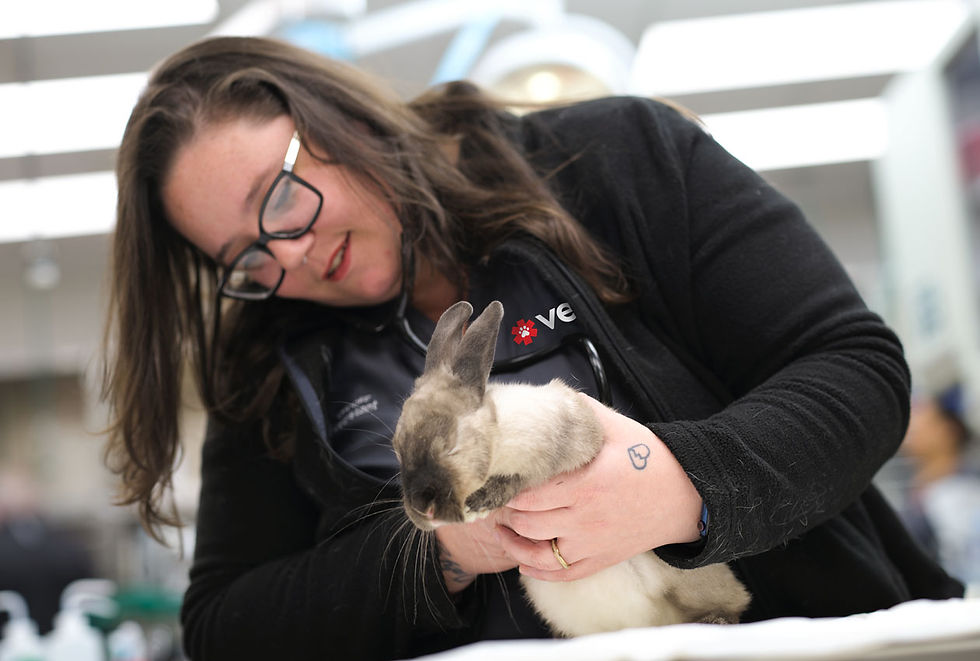
Senior rabbit's aging health problems can be noticeable
Other signs of emergency in senior rabbits
Because rabbits instinctively hide illness, even subtle changes deserve attention. Seek emergency care immediately if your rabbit has:
Difficulty breathing
Collapse or inability to stand
Severe lethargy or unresponsiveness
Bleeding that won't stop
A bloated abdomen
Reduced or no appetite
No appetite combined with no fecal pellets
Sudden paralysis or loss of balance
Trauma from a fall or attack
Heatstroke
Inability to urinate
Even if you're unsure whether it's an emergency, it's always safer to call an emergency veterinary hospital like VEG ER for Pets that treats rabbits for guidance.
Caring for a senior rabbit at home
Although emergencies can't always be prevented, good daily care can help keep senior rabbits healthier for longer.
Pay close attention to:
Daily appetite
Water intake
Fecal pellet size and quantity
Body weight
Mobility
Grooming habits
Behavior and activity level
Simple ways to help your senior rabbit
Easy access to food and water
A well balanced diet
Low-entry litter boxes if mobility becomes difficult
Routine veterinary checkups — many conditions are easier to manage when detected early
Identify your rabbit’s ER vet hospital before an emergency happens
One of the biggest mistakes rabbit owners make is assuming every emergency veterinary hospital treats rabbits. Many emergency clinics primarily see dogs and cats, and not all have vets experienced in rabbit emergency medicine.
If your rabbit suddenly stops eating at 10pm or develops breathing difficulty over the weekend, you don't want to spend precious time searching online for a hospital that accepts rabbits. Having a plan can save valuable time when minutes matter. Know that VEG hospitals are open 24 hours every day to help your rabbit's emergencies.
VEG animal hospital treats rabbit emergencies—open 24/7
You know your rabbit better than anyone. If you have a senior rabbit showing signs of aging health problems, help is always available at VEG ER for Pets. But remember, rabbits often don’t show obvious symptoms. Call and speak to a VEG animal clinic vet or walk in immediately if you feel like something is just "off" with your bunny. Our experienced team will help diagnose and treat your rabbit right away.