Updated: Jun 10
Do you have a pregnant dog? Congrats! Do you know how to tell when she goes into labor? A dog’s gestation period (the length of time she is pregnant) is 63 days. If your dog is expecting a litter of puppies, you need to know how to recognize the signs of labor in dogs.
In this article, we’ll explore the six most common signs of labor in dogs. By keeping this information in mind, you’ll be able to tell when your dog is going into labor and it’s time for your dog to give birth to her puppies. You'll know when you need to become more active in helping her through her labor and if you need to contact the emergency vets at VEG ER for Pets.
Signs that your dog is going into labor
Listed below are the six signs that indicate labor in a dog:
Your dog's temperature drops below 100º F (around 98-99ºF)
Your dog is nesting
Your dog is vomits, has diarrhea, or is refusing food
Your dog is licking her genitals or nipples
Your dog’s nipples have enlarged and stomach is firm
Your dog’s behavior is changing
Below, we’ll explore each of these signs that your dog might be going into labor in more depth.
1. Your dog’s temperature drops below 100 degrees Fahrenheit before labor
A dog’s normal body temperature stays around 101 to 102ºF. During labor, however, it is normal for a dog’s temperature to drop to 98 or 99ºF instead. This typically happens about 24 hours before the actual labor begins and can be a great indicator that you have puppies on the way.
This temperature drop happens when your dog’s progesterone levels suddenly lower. It may only last for a few hours in some instances, so twice-daily monitoring of her body temperature can help alert you to the impending birth. Ask your primary care veterinarian to show you how.
2. A Dog in labor may be nesting
Nesting behaviors can happen any time during a dog’s pregnancy. However, they are a lot more common during the last few days leading up to labor. If you notice your dog trying to build her “nest” or collecting items from around the home to take to her favorite spot, upcoming labor could be the reason. You may want to make a whelping box to provide a safe and clean area for your dog to deliver.
Nesting may also occur when a dog is in heat. Some dogs, even when they have been spayed, continue to practice nesting habits throughout their lives as well. Nesting on its own does not indicate labor, but with other signs on this list, it can help you determine the start of your dog’s labor.
3. Vomiting, diarrhea, and refusal of food is a sign dog is in labor
By itself, an upset stomach is not necessarily a sign of labor beginning in your dog. However, when you see it in conjunction with other vomiting, diarrhea, or refusal to eat, or when it occurs around her due date, it can let you know the puppies are coming soon.
Many dogs will vomit during labor, and may also have diarrhea. Make sure your dog has access to plenty of fresh drinking water to prevent her from becoming dehydrated during this crucial part of her pregnancy and delivery.

4. Dog's in labor may start licking the genitals
Excessive licking of the genitals near her due date is a good sign that your dog is going into labor. However, if you are unsure whether or not your dog is pregnant, excessive genital licking may indicate a health problem instead. Consider your dog’s overall health and wellness, as well as her expected due date, to figure out if this is a sign of labor or not.
Along with genital licking, your dog may also excessively lick her nipples in preparation for giving birth. Both behaviors are completely normal in the context of canine labor and are nothing to worry about.
5. Nipple enlargement and a hardened abdomen are signs of dog labor
As your dog reaches her due date, her nipples will enlarge as her milk comes in. When you notice your dog’s mammary glands growing larger, this means she is about to go into labor within the next few days, in most instances.
At the same time, you may notice your dog’s abdomen feeling much firmer and harder to the touch than it has previously. Both a firm abdomen and enlarged nipples together mean labor is just around the corner, and you should be expecting puppies any day.
6. Behavioral changes can indicate labor in dogs
Finally, your dog will undergo behavioral changes during labor. It is normal for your dog to become restless and anxious or irritable and defensive, and she may want to run off and hide while she gives birth to her puppies.
Alternately, some dogs become especially clingy and want to be near their owners constantly when labor is near, instead.
Either way, you can help your dog stay calmer during labor by providing her with a birthing space. Set up a private, quiet part of your home for your dog to use for giving birth. Try to have your dog accustomed to the whelping box prior to labor. She will feel much more comfortable, and she and the puppies will all be safer in this area, as well.
Prepare for your pregnant dog’s delivery of puppies!
Labor typically goes smoothly for dogs, but it’s necessary to be ready for just about anything when helping your dog through labor, too. Be sure to talk with your vet in the weeks leading up to your dog’s labor to find out what to expect during labor and in the weeks after.
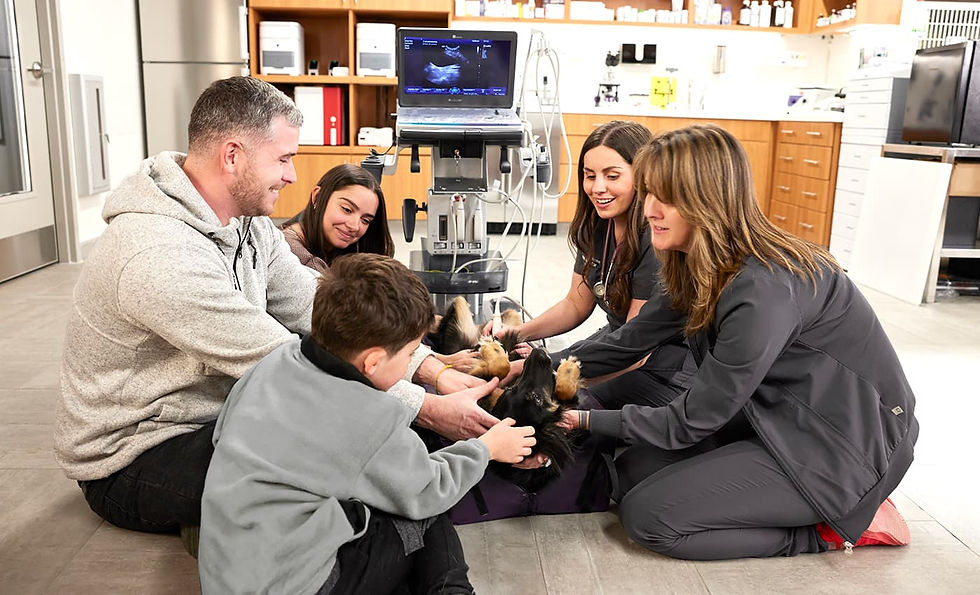
At 30 days of pregnancy bring your dog to the veterinarian for a wellness check-up and to possibly confirm the pregnancy with an ultrasound or blood test. Mineralization (the forming of teeth and bones) of the fetal skeleton takes place around Day 45 and thereafter can be seen on radiographs. Taking X-rays to determine how many puppies to expect can help you know when she is finished delivering.
Emergency signs: your dog is having a difficult labor
If you notice signs of labor in your dog, it’s time to get involved. If you’ve had experience with helping dogs deliver puppies before, you should be able to handle the process yourself. If not, however, you may want to take your pet to the vet or contact your vet for advice throughout the experience.
Signs that may indicate an emergency during a dog's labor:
No puppy within 30 minutes of green discharge
30 to 60 minutes of strong contractions occur with no puppy being produced
More than 2 hours pass between pups and you know there are more inside
She fails to go into labor within 24 hours of her temperature drop
Dog is obviously in extreme pain
Foul smelling discharge
Puppy is visible and stuck in the birth canal
Excessive bleeding
Puppies are stillborn or alive but they seem too weak
Greater than 70 days of gestation have passed
If one or many of these signs are present, contact your local VEG emergency vet immediately and seek immediate care.
At all of our VEG locations, we have teams of compassionate, experienced emergency veterinarians and staff who are dedicated to helping your pet in any situation. If your dog is in labor or having difficulty with this, bring her to any of our locations. We’re available 24/7 to make sure your pet receives the proper care she needs.
Dog labor FAQs
How long is a dog in labor?
Typical labor duration is 6-12 hours. Expect restlessness, panting, and shivering. You may even notice her nesting behavior becomes extreme. Your dog may also vomit during labor. If this happens, offer her fresh water to avoid dehydration. Most likely, your dog will not have any interest in food. This is perfectly normal behavior during labor.
How long will it take to deliver all the puppies?
Once the dog starts actively pushing, it can take up to 12-24 hours, with the first puppy coming after 1-2 hours of contractions and up to 2 hours between puppies. Contact VEG if more than 24 hours has passed OR any of the above emergency signs mentioned in the blog are noticed.
How do you induce labor in a dog?
Do not attempt to induce labor on your own. If you’re concerned that labor isn’t starting when expected, contact your primary care vet for guidance rather than trying home remedies. If after hours, contact VEG, open 24/7. Medications or methods to start labor can be dangerous unless prescribed and supervised by a veterinarian.
What is a dog’s temperature when in labor?
One of the most reliable signs that labor will begin soon is when a dog’s normal body temperature (about 100–102.5°F) drops below 100°F, often to around 98–99°F. This typically happens in the 12–24 hours before labor starts.
What are the stages of labor in dogs?
Dogs go through three stages of labor:
Stage I: Cervix is dilating and preparing for the uterus to start contractions — mom-to-be may be restless, panting and nesting.
Stage II: Active labor with contractions and puppy delivery — puppies usually arrive one at a time.
Stage III: Placenta delivery — each puppy’s placenta is typically passed shortly after.
Should a pregnant dog’s belly be hard?
A firm and hard belly, particularly in the final stages, is typically due to a full uterine expansion to accommodate the puppies. However, extreme firmness, distension with discomfort or other sudden changes warrant veterinary evaluation right away.
What are the visual signs my dog is going into labor?
Signs your dog is nearing labor include:
Restlessness and nesting behaviors
Anxiousness, irritability and clinginess
Drop in body temperature
Clear discharge before the first puppy
Visible abdominal contractions once active labor begins
These behaviors typically appear in the 24–72 hours before birth.
How to help a dog in labor?
As you approach her labor, help your dog stay calmer by providing her a quiet, comfortable birthing space. You could prepare a whelping box with soft bedding and fresh water. Watch quietly and avoid interfering unless there’s a clear problem.
Have your primary care vet’s contact information ready for advice. For emergencies or after hours questions, keep your nearest VEG dog hosptial's contact info handy in case complications arise.
Does calcium help a dog in labor?
While calcium plays a role in muscle and uterine contractions, supplementing calcium without veterinary guidance is not recommended. Always consult your vet before giving any supplements.
Can I move my dog once she’s in labor?
It’s best to limit movement once active labor has started. Too much stress or activity can slow labor progress. If she has already started delivering, it’s best to let her finish in her chosen spot.
Do dogs sleep while in labor?
Yes. In early labor or between puppies, dogs often rest or nap. These short rest periods are normal and help conserve energy for delivery. While a 1 or 2-hour break is common, reach out to your vet or VEG if your dog rests without straining for more than 2 hours.
Can a dog be in labor for 2 or 3 days?
No. Normal canine active labor — starting with contractions — should not exceed 24 hours. If labor seems to stall or is prolonged beyond this, or if more than 2 hours pass between puppies, contact your vet or a VEG emegency animal hospital immediately.
Can I feed my dog while she’s in labor?
Dogs often lose their appetite in active labor. Offering small amounts of water is fine, but most dogs normally don’t eat until after delivery.
Can dogs go into premature labor?
Yes. Dogs can begin labor before the typical 63-day gestation period, which is considered premature.
Signs a dog is in early labor may include:
Discharge
Early nesting
Restlessness
Temperature changes
If you suspect your dog is in premature labor, contact your primary care vet immediately, as early veterinary intervention is critical. For after-hours vet questions, call VEG emergency animal hospital, open 24/7.