Updated: Aug 31
One day, you notice that your guinea pig’s not pooping. What happened? They had been doing just fine, and now suddenly, besides not pooping, they look really dumpy and seem to be off their food.
Unlike dogs and cats (and people), constipation is not the most common reason for difficulty passing stool in guinea pigs. While constipation is possible, a guinea pig that has stopped pooping is often experiencing gastrointestinal (GI) stasis, a serious condition in which the digestive system slows down or stops moving normally.
Knowing what to watch for and when to seek emergency veterinary care from VEG ER For Pets can make all the difference. Here's what every guinea pig owner should know about GI stasis, why it happens, and how it's treated.
Signs your guinea pig may have GI stasis
It can be hard to tell if your guinea pig is suffering from stasis, because guinea pigs often hide signs of illness until they’re very sick. If your guinea pig is producing fewer droppings, has stopped pooping altogether, or is showing any of the signs below, they should be evaluated by VEG ER For Pets as soon as possible.
Loss of appetite
Guinea pigs are grazing animals and need to eat almost constantly to keep their digestive system moving. A guinea pig that isn't interested in hay, pellets, or their favorite treats may be developing GI stasis. Even a decrease in appetite can be an early warning sign that something is wrong.
Hiding or lethargy
Guinea pigs are generally very curious, and like to know what’s going on. If they seem quieter than usual, stop interacting with you, or are suddenly hiding more than normal, this can be cause for concern. As the condition progresses, they may become weak, reluctant to move, or appear hunched due to abdominal discomfort.
Dry stool or reduced amounts of stool
Healthy guinea pigs produce a large number of pellets every day. Their droppings should be moist, oval-shaped, firm, and fairly consistent in size. If your guinea pig’s droppings are dried up, very small, or misshapen, then they may have been sitting in the intestines for too long (and therefore too much water is being absorbed). This can be a sign of stasis.
Common causes of GI stasis in guinea pigs
GI stasis isn't a disease itself - it's usually a symptom of an underlying problem that's causing your guinea pig to eat less or slowing down their digestive system. Identifying and treating the underlying cause is an important part of helping your guinea pig recover.
Some of the most common causes of GI stasis in guinea pigs include:
Diet changes and lack of fiber
A very large percentage of stasis emergencies are related to diet. Fiber is essential for keeping a guinea pig's digestive system moving properly. Unlimited access to fresh grass hay should make up the majority of a guinea pig's diet, with guinea pig pellets and fresh vegetables offered daily. Diets that are too low in fiber or too high in carbohydrates can disrupt normal digestion and increase the risk of GI stasis.
Vitamin C deficiency in guinea pigs
Guinea pigs require supplemental vitamin C because their bodies can not synthesize this essential nutrient. While many guinea pig pellets have vitamin C added, it is often broken down/lost shortly after the bag of pellets is opened.
A vitamin C deficiency can lead to weakness, joint pain, and other health problems that reduce a guinea pig's appetite. Since eating less can quickly slow the digestive tract, maintaining adequate vitamin C intake is an important part of supporting digestive health.
Dental problems that affect eating
Guinea pigs have teeth which grow continuously throughout their life and they need to constantly chew in order to stay healthy. If the teeth are not healthy, then they can not chew properly, which means that the food is not being digested properly. Guinea pigs with dental disease often eat less or stop eating altogether, increasing their risk of developing GI stasis.
Dehydration
If there is not enough water taken in (most commonly found in the food) then the intestines become dry. This in turn leads to a slowdown of movement, which can be a reason for your guinea pig not pooping.
Stress, pain, and other health conditions
Guinea pigs are sensitive animals, and stress, pain, or illness can cause them to eat less or stop eating altogether. Since guinea pigs rely on a constant intake of food to keep their digestive system moving, even a short period of reduced appetite can increase the risk of GI stasis.
Painful conditions such as urinary issues, injuries, infections, or other underlying illnesses may contribute to decreased appetite and digestive slowdown. Changes in the environment, travel, or other stressful events may also play a role, especially if your guinea pig is already experiencing another health concern.
Treatments for GI stasis in guinea pigs not pooping
If your guinea pig has stopped eating or is no longer producing droppings, they should be evaluated by a veterinarian as soon as possible. GI stasis can become life-threatening, and treatment depends on identifying and addressing the underlying cause.
Treatment may also involve addressing the underlying reason your guinea pig developed GI stasis. For example, a guinea pig with dental disease may need treatment for painful teeth, while a guinea pig with an infection or other illness may require additional medical care.
Because guinea pigs can decline quickly when they stop eating, early veterinary intervention gives them the best chance of recovery.
Fluids can help your guinea pig poop
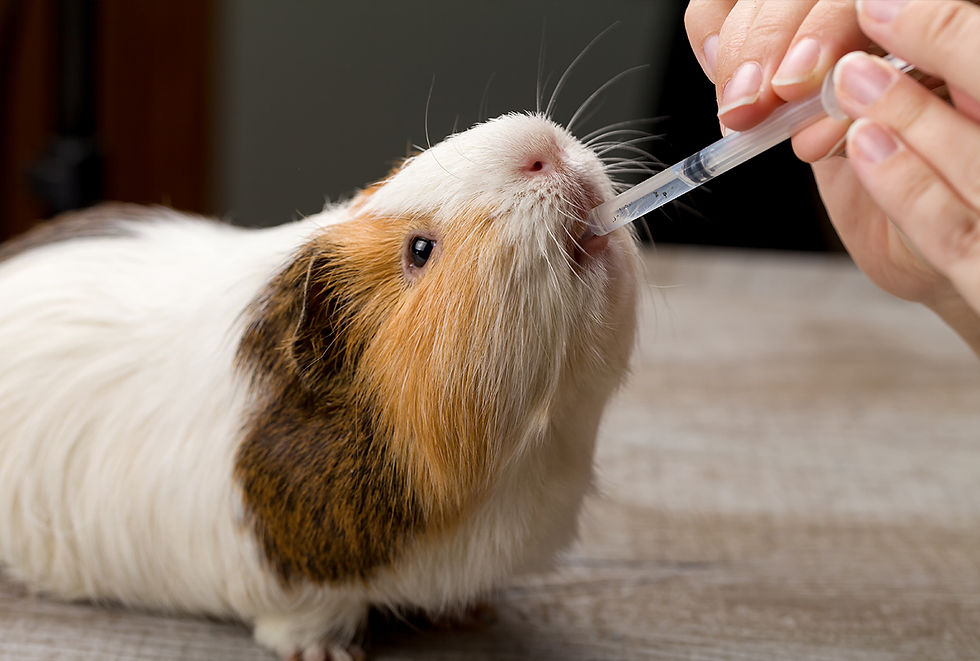
Your pet may need supplemental fluids to help re-hydrate the intestines and allow them to start moving. These can be administered by your veterinarian, either under the skin or in some cases intravenously.
Pain management
When the intestines stop moving, it is very painful. Your veterinarian may provide an injection of a pain medication, and may send you home with additional doses to give.
Heat support
When a guinea pig stops eating, they may struggle to maintain their normal body temperature. As their condition worsens, dehydration, weakness, and decreased energy intake can contribute to a dangerous drop in body temperature. Your veterinarian can provide appropriate warming to help your pet’s temperature return to normal.
Constipation? It could be GI stasis. Call VEG if your guinea pig’s not pooping
Stasis can be a life-threatening condition, and you should contact your family veterinarian or nearest VEG location (where you will always speak immediately with a qualified veterinarian). If promptly treated, stasis can be managed and your bunny or guinea pig can quickly be back to their normal hoppy or boppy self!