Think about emergency veterinary care and you might picture the front lines; skilled doctors and teams using hard-earned skills during a pet family’s most stressful moments. What you don’t often see is the foundation that makes those moments possible.
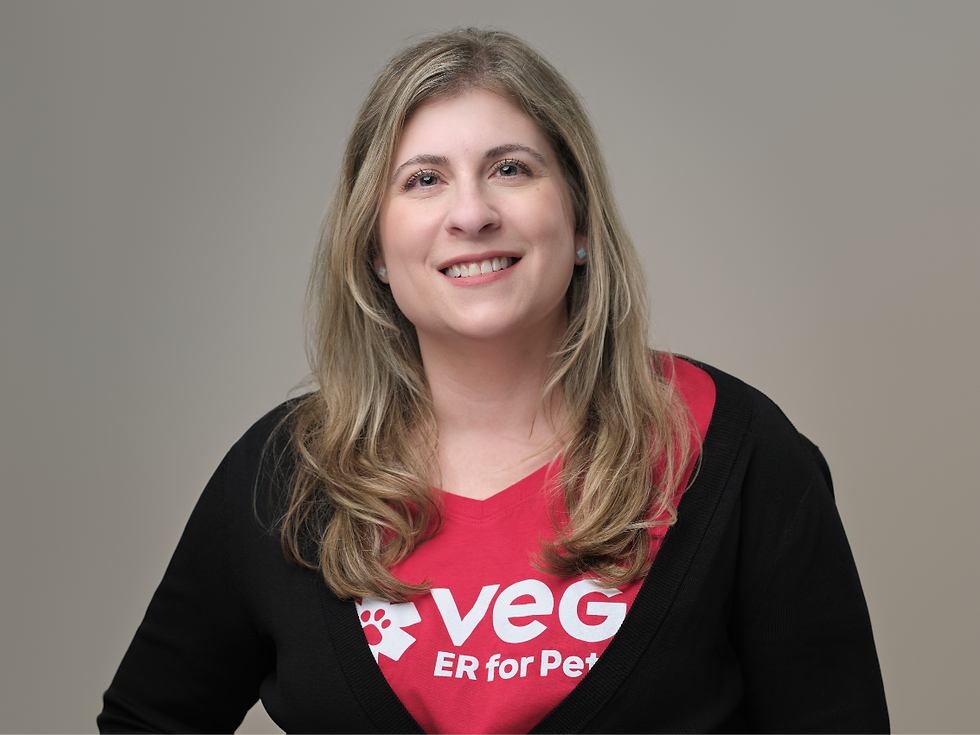
For VEG ER for Pets, every hospital begins long before the doors open. It starts with a letter of intent (LOI) and eventually, the lease, which holds the balance between real estate realities and the unique needs of emergency medicine. And behind all of those leases is Lauren Carnevale, a real estate attorney whose collaborative approach has helped shape more than 130 VEG locations across the U.S. and in Canada.
In this article, Carnevale shares insights from her journey, what makes emergency veterinary leasing different, and how each lease is optimized to live up to VEG’s mission of helping people and their pets when they need it most.
From traditional real estate to a collaborative niche
Carnevale didn’t start her career focused on leases. Early on, her work centered on commercial real estate purchases and financing, representing both borrowers and lenders. That changed when she joined a firm that had a boutique practice serving veterinary, dental, and medical practices.
“There were always transactions in motion,” Carnevale recalls. “It was a very lively environment, and I found myself filling a vital niche in the leasing side of those deals.”
Most of that work involved lease assignments or new leases tied to practice acquisitions. Over time, she realized leasing aligned naturally with her personality.
“Real estate—especially leasing—isn’t nearly as controversial as other areas of law. Both sides are working toward the same goal. And because leases often span 10, 15, even 20 years, it’s really about building a long-term relationship.”
That philosophy would become central to her work with VEG.
Working at the firm of Mandelbaum Barrett (then Mandelbaum Salsburg), Carnevale negotiated VEG’s first leases alongside VEG Co-Founders David Bessler and David Glattstein. When Jennifer Hanlon, VP of Real Estate & Development, joined VEG, Carnevale continued that work—partnering closely with Jennie on all of VEG’s lease negotiations.
When a legal team was formed at VEG, VEG’s Chief Legal Officer, General Counsel Shelly Paioff was thinking of hiring an in-house real estate lawyer. Carnevale heard about the role and recalls, “I couldn’t let that [role] be for anybody but me because I was so much more invested in VEG than anything else I’ve ever worked on.”
She met with Shelly, accepted an offer, gave the firm 30 days notice, and her work as an official VEGgie began!
Scaling up on the VEG rocketship
Carnevale's early work involved lease assignment negotiations tied to acquired veterinary practices. But, as the company evolved, so did the complexity and scale of her role. When VEG began developing de novo and ground up hospitals, lease negotiations became more intricate.
“At first, we were negotiating maybe five leases a year across a few states,” she says. “Then the pace accelerated quickly. Before I joined VEG in-house in 2022, I was handling 25 to 30 leases annually. It became very clear the growth was exponential. The rocketship had taken flight.”
Today, that growth is supported by deep cross-functional collaboration. Though Carnevale works on the Legal team, her work sits at the intersection of Legal, Real Estate, Design & Construction, and Operations, ensuring every lease reflects the realities of how VEG hospitals function.
“That’s the best part of being in-house,” she explains. “I see the full scope of each project and the issues that could arise from a site.” This insight makes Carnevale more effective in negotiating the right terms.
The challenges of veterinary real estate
Not all leases are created equal—and veterinary hospitals bring a unique set of challenges.
“A big part of the job is education,” Carnevale says. “With larger landlords, we may have multiple leases with them, so they know what they’re getting with VEG. But some landlords often come in with preconceived notions about what a veterinary hospital is.”
Sometimes, those misconceptions are dramatic.
She continues, “Vet offices have a stigma, noisy, smelly, etc. Will there be loud pets? Will there be pet waste on the walkways? The answer is VEG is different from your average vet. We’re running an ER; our hospitals must be sanitary and we have strict cleaning processes in place.”
Still, concerns around noise, cleanliness, and safety are common for landlords. VEG addresses those head-on, often inviting landlords to visit existing hospitals.
Says Carnevale, “They’re always floored afterward. Once they see the caliber of our operations, it changes everything.”
VEG has carved out a niche where it’s a sought-after tenant in high-quality centers.
“Caliber in real estate isn’t just being on ‘Main and Main,’” she notes. “It’s being alongside national brands like Trader Joe’s or Panera.”
Designing for the reality of emergencies
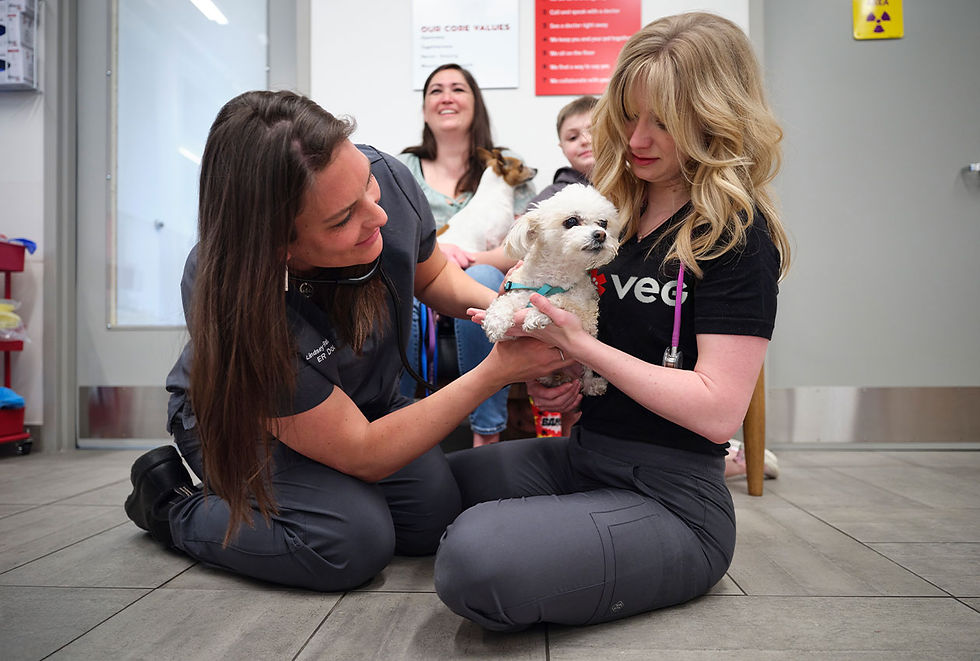
VEG’s emergency veterinary care comes with operational demands that go far beyond a typical retail or medical lease. For example, VEG hospitals are open 24/7/365. Pet parents often arrive in distress, sometimes visiting for the first time under urgent circumstances, so VEG hospitals must be easy to find from the street. Every aspect of a site—from lighting to traffic patterns—matters.
Carnevale explains, “For instance, we can’t have double-stacked drive-thru lines flowing past our front doors. Everything we’ve encountered in the past has made us smarter in how we approach things.”
Other priorities include:
Parking that’s near VEG’s front door.
Utility capacity, which Carnevale calls “a huge issue” given the equipment demands of emergency hospitals
“These aren’t ‘nice-to-haves,’” she emphasizes. “They’re essential to how we deliver care.”
Choosing collaboration over conflict
Lease negotiations can have their complexities, but Carnevale has developed a style that works.
“This is the beginning of a long-term relationship,” she says. “My style isn’t adversarial, after all, we’re establishing a relationship, we could be here for decades.”
That mindset shapes how she prioritizes issues. “You can’t win every point," Carnevale explains, "You have to pick your battles and focus on what truly matters operationally.”
Her experience—now spanning more than 175 leases—has sharpened that instinct.
“I have a pretty expansive bag of tricks,” she says. “I know what we can live with and what we can’t. And I can usually spot the tone of a lease right away and tailor my approach.”
When needed, she steps into a firmer role. “Occasionally I’m the ‘bad cop’,” she admits. “That allows the rest of the team to maintain positive relationships with landlords, which is critical for getting hospitals built and opened.”
Common myths in veterinary hospital leasing
One of the biggest misconceptions Carnevale encounters is the idea that leases are standardized.
“People think they’re all boilerplate,” she says. “They’re not. I call them snowflakes. Every lease is different, the language with which it's written, the structure and nuances. I read every word, whether it’s 25 pages or 75.”
“In reality, the biggest risks are operational,” she explains. “If a lease doesn’t account for how the hospital actually functions, that’s where problems arise.” That’s why VEG emphasizes collaboration across teams early in the process—aligning legal, design, and operational considerations from day one.
Looking ahead: innovations and expansions for VEG
As VEG’s footprint grows, Carnevale's role evolves alongside it. She helped develop a standardized VEG lease form, now used across multiple deals each year, and embraced tools like AI to streamline comparisons between letters of intent and lease drafts.
“AI can flag differences or missing terms,” she says. “But I always review it. It’s a tool—not a replacement for judgment.”
She now also oversees the zoning reviews for each potential location, to determine:
Are veterinary hospitals allowed in the zone?
Are they allowed to operate 24 hours?
Can the hospital have a pet relief area?” (This is a fenced area designated for one pet at a time, strictly used for relief.)
Additionally, her work has also extended internationally, with VEG’s expansion into Canada. “It was surprisingly similar to the U.S.,” she states, “but in Canada, the writing is a lot more literal in terms of keeping to the letter of intent. There’s also a good amount of trust between parties.”
Even so, the fundamentals remain the same: collaboration, clarity, and a focus on long-term success.
At VEG, there's purpose behind the process
For Carnevale, the most meaningful part of her work isn’t the deals—it’s the impact.
“I’ve always loved animals,” she says. “But I could never do what our clinical teams do. I’d be the one crying!”
Carnevale's contributions to VEG’s success cannot be overstated. It takes an adept lawyer to address all of the nuances required for emergency vet hospital leasing.
Could she imagine going back to a firm?
“Heck no!” She states, “This is my personality, it’s what I feel passionately about. This is how I support the mission—by helping bring these hospitals to life. Knowing they’re there for people and their pets in critical moments… that’s incredibly rewarding.”
It’s a reminder of what is actually behind every VEG hospital. More than just a building, every VEG ER for Pets is a carefully created and skillfully negotiated healing space; designed with intention and built through collaboration. Ultimately, these efforts serve the community and live up to VEG’s mission: Helping people and their pets when they need it most.